
The B2B Tech Branding Maturity Model: From Startup to Enterprise Growth
What Is a B2B Tech Branding Maturity Model?
A brand maturity model helps companies evaluate how developed their branding capabilities are and how well brand supports growth, sales, and market perception. In B2B tech, brand maturity is not only about visual quality. It is about whether the brand can create a clear market position, support commercial teams, and remain consistent as the company grows.
At an early stage, brand is often informal and reactive. As the company develops, branding becomes more connected to marketing strategy, product communication, sales enablement, and leadership decision making. In mature organizations, brand becomes a strategic asset that shapes trust, differentiation, and brand equity.
This is why the b2b marketing maturity model and brand maturity are closely related. A company with a low marketing maturity level may have scattered campaigns, inconsistent messaging, and no clear measurement system. A more mature company has a defined strategy, shared tools, and a clear understanding of how brand contributes to business results.
For tech companies, this matters because buyers often evaluate complex products across multiple channels and stakeholders. Without a mature brand system, the company becomes harder to understand. With a stronger B2B tech branding strategy, it becomes easier for buyers, employees, and partners to understand what the company offers, why it is different, and why it is credible.
Stage 1: Early Stage Startups (Founder Led Branding)
At the first stage, branding is usually led by the founder. The brand often reflects the founder’s understanding of the market, the product, and the customer problem. This is common for an emerging brand, especially in SaaS or artificial intelligence companies where the product and category are still changing.
The strength of founder led branding is speed. Messaging can change quickly based on customer conversations, sales calls, and early market feedback. This flexibility helps the company test its positioning and identify what resonates with buyers.
The weakness is inconsistency. There may be no formal identity system, no stable messaging framework, and no shared standards across the website, pitch decks, sales materials, and product communication. The sales team may describe the product one way, while the website explains it differently.
At this maturity level, the biggest mistake is investing in too complex activities too early. A startup does not need a full brand system before it has a clear understanding of its customer needs and market fit. However, it does need a basic foundation. This includes a simple positioning statement, a clear message, and a visual identity that creates enough confidence for early buyers.
Branding for tech companies at this stage should support learning. The goal is not to appear like a mature brand before the business is ready. The goal is to create enough clarity to sell, test, and improve.
Stage 2: Growth Stage Companies (Positioning & Differentiation)
At the growth stage, brand maturity becomes more strategic. The company has stronger evidence of demand, a clearer customer base, and more pressure to compete. The market may include many similar tools, features, and promises. This is where positioning becomes a critical part of growth.
A growth stage company needs sustainable positioning. It must define what makes the product different, which buyers it serves best, and why its approach is more relevant than alternatives. This requires an in depth understanding of the competitive landscape, customer needs, and the category context.
At this stage, marketing leaders usually begin formalizing brand and messaging. The company may create its own marketing department, develop clearer campaign systems, and align marketing teams with sales and product. Brand work becomes less dependent on individual founder intuition and more connected to repeatable marketing practice.
The role of branding is to make differentiation easier to communicate. A strong positioning system helps the sales team explain value more consistently. It helps marketers create content across multiple channels without rewriting the story every time. It helps buyers understand the product faster.
This is also where the b2b marketing maturity model becomes useful. Companies can evaluate whether their brand and marketing systems are developed enough for the respective maturity level. If the brand is still informal while the business is entering a more competitive stage, growth can become harder to sustain.
For B2B tech companies, positioning is not cosmetic. It directly influences pipeline influence, buyer perception, and the ability to generate loyal customers over time.
Stage 3: Scaling Companies (Brand Systems & Consistency)
Scaling companies face a different type of challenge. The problem is no longer only positioning. The problem is execution across complexity.
As the company grows, it usually adds more product lines, markets, content channels, martech tools, and cross-functional teams. Sales, marketing, product, customer success, and employer branding all begin using the brand in different contexts. Without a shared system, the brand becomes inconsistent.
This is where brand systems become essential. A scaling company needs a documented messaging framework, clear visual standards, shared content tools, and governance processes. These systems help teams create materials in the best possible way without depending on constant manual review.
Consistency matters because buyers see the brand across many touchpoints. They may read the website, attend a webinar, review a sales deck, compare competitors, and speak with the sales team. If each interaction feels disconnected, trust weakens. If every interaction fits within a congruent frame, the company feels more credible.
At this stage, brand maturity is closely tied to management and operational efficiency. The company must identify where inconsistencies appear, evaluate which tools are missing, and introduce appropriate measures. This may include brand guidelines, asset libraries, templates, training, and clearer ownership across teams.
The branding challenge is not to control everything. It is to create a system that enables consistent execution without slowing the business down.
Stage 4: Enterprise Brands (Category Leadership & Brand Equity)
At the enterprise stage, brand becomes a strategic asset. A mature brand does more than explain the company. It shapes the market, influences buyer expectations, and strengthens long term business value.
Enterprise companies often manage many brands, product lines, markets, and organizational functions. Brand maturity at this level requires architecture, governance, and measurement. The company must decide how its products relate to one another, how the master brand creates trust, and how different business units maintain consistency without losing relevance.
This is also where brand equity becomes central. Strong brand equity supports trust, preference, pricing power, and resilience. For B2B technology companies, this is especially important because buyers often make high risk decisions involving complex products, long implementation cycles, and significant internal approval.
A mature brand also influences category leadership. Enterprise brands do not only respond to the market. They help define how the market understands the problem, which solutions matter, and what standards buyers should expect. This requires a thought through narrative, consistent messaging, and a strong link between brand and business strategy.
The challenge is constant change. Even mature brands must evolve as markets shift, new competitors appear, and technologies such as artificial intelligence change buyer expectations. Enterprise branding therefore requires both stability and adaptation.
At this stage, brand measurement becomes more important. Companies need to understand how brand affects perception, pipeline, loyalty, and business results. Without measurement, brand remains difficult to manage as a serious investment.
How to Move Up the Branding Maturity Curve
Moving up the maturity scale requires companies to identify the gap between their current brand capabilities and their business stage. The key question is not whether the brand looks good. The question is whether the brand is developed enough to support the company’s growth.
For early startups, the next step is usually clarity. The company needs to define its customer, its promise, and its market position. This does not require a complex system, but it does require a clear message that can be repeated across sales, website, and investor communication.
For growth stage companies, the priority is differentiation. They need a more structured positioning system and a stronger connection between marketing, sales, and product. At this point, brand work becomes a sensible investment because the cost of unclear positioning begins to affect pipeline and buyer trust.
For scaling companies, the priority is consistency. They need tools, governance, and shared standards that allow multiple teams to execute the brand without fragmentation. This is where brand maturity becomes an operational discipline.
For enterprise companies, the priority is equity management. The brand must support category leadership, portfolio clarity, and long term strategic development. Leadership must evaluate brand not only as a marketing function but as a business capability.
The most promising approach is to assess brand maturity across four dimensions: strategy, system, adoption, and measurement. Strategy defines what the brand stands for. System turns that strategy into tools. Adoption ensures that teams use those tools. Measurement connects brand activity to business results.
When these dimensions develop together, branding moves from reactive execution to strategic infrastructure.
Examples
Datadog
Datadog shows how a B2B tech company can mature from focused product communication into a broader enterprise brand. As its product lines expanded, the company maintained a clear position around observability and operational visibility, helping buyers understand a complex portfolio within one brand frame.
ServiceNow
ServiceNow demonstrates enterprise brand maturity through category leadership and strong brand equity. Its brand has evolved from IT service management into a broader enterprise workflow platform, supported by consistent positioning across products, sales, and market communication.
FAQs
What is a B2B tech branding maturity model?
It is a framework for evaluating how a tech company’s brand capabilities evolve from informal startup branding to enterprise level brand systems.
Why is branding important for B2B tech companies?
Branding helps complex companies clarify value, build trust, differentiate from competitors, and support sales across long buying cycles.
How do you build a brand for a SaaS startup?
Start with clear positioning, simple messaging, and a basic identity system that can evolve as customer understanding improves.
What are the stages of brand maturity in tech companies?
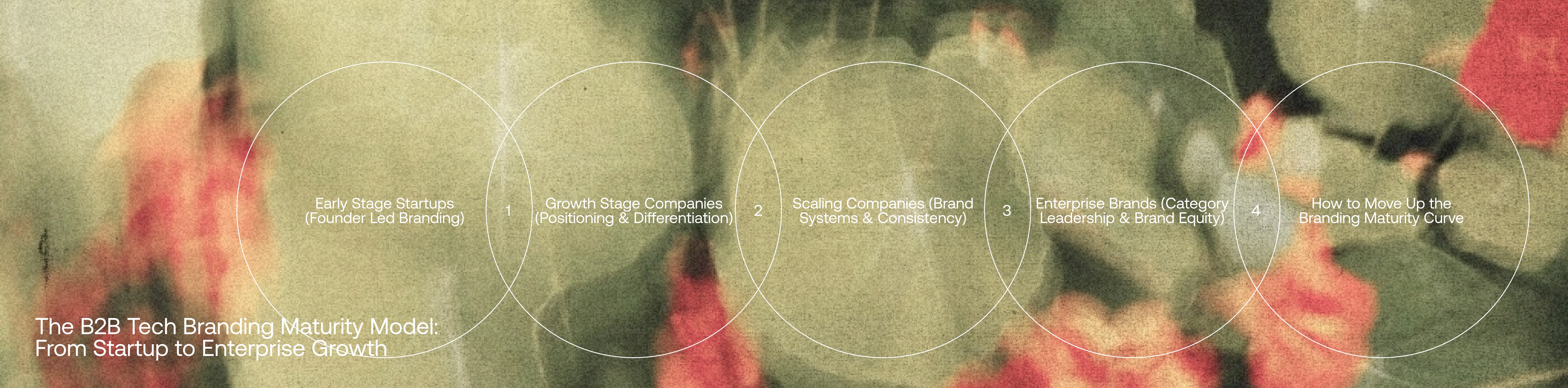
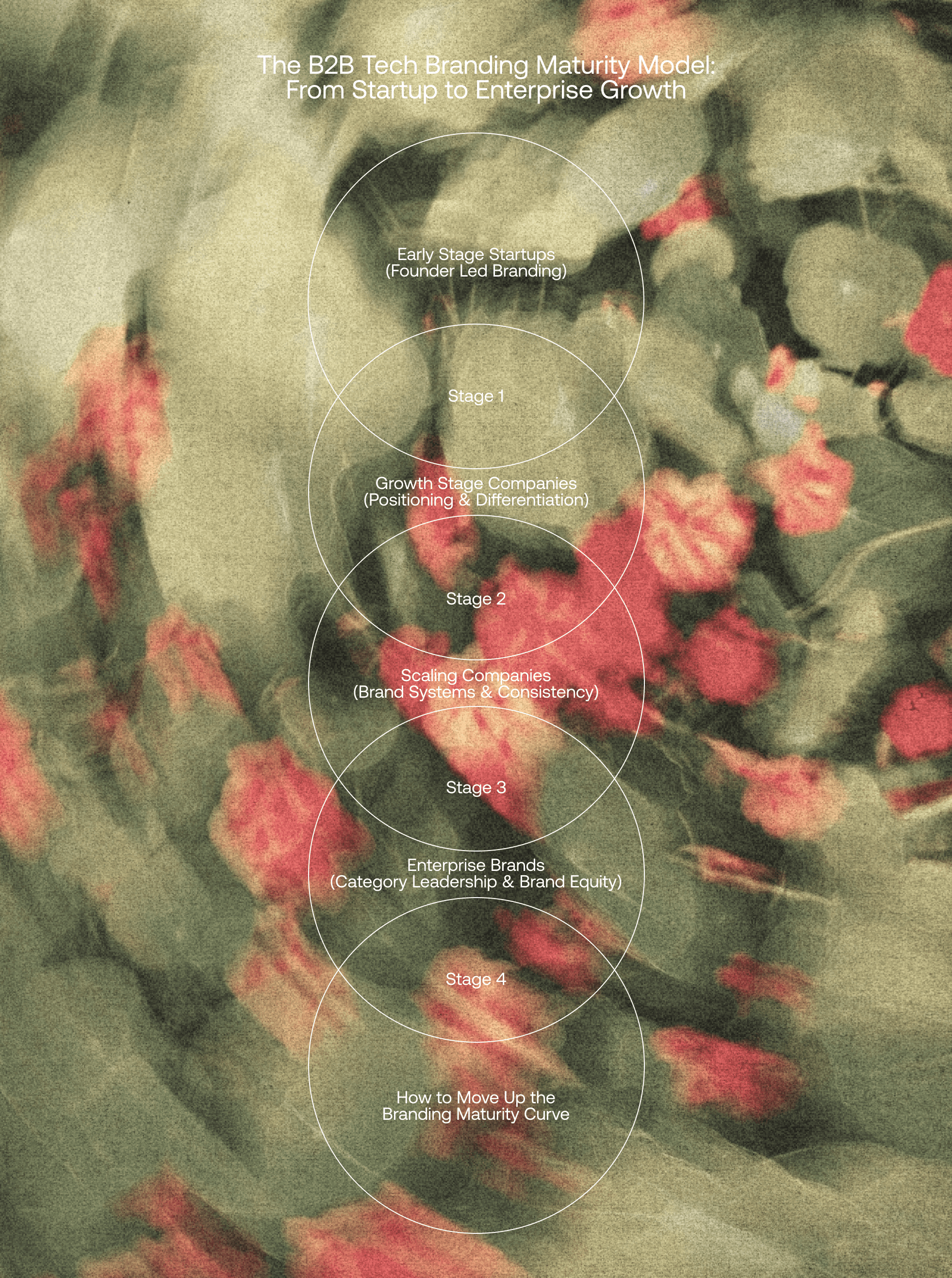
The main stages are founder led branding, growth stage positioning, scaling through brand systems, and enterprise brand equity.
When should a tech company invest in rebranding?
A company should consider rebranding when its current brand no longer reflects its market position, product scope, audience, or growth strategy.

Masha is the founder of Bolder, a branding and communications agency for tech startups in AI, robotics, biotech, deep tech, and energy. She’s built three companies and leads a team of talented strategists and designers, helping technical founders turn hard to explain work into brands sharp enough to match the tech behind them.