

Why “Flexible Branding” Often Leads to Brand Dilution?
Maintaining a strong brand becomes more complex as companies expand into new markets, launch additional product lines, or experiment with dynamic branding systems. Flexible branding is often introduced as a way to support growth, adaptation, and relevance across different audiences. In practice, however, flexibility without structure frequently accelerates brand dilution, weakening brand equity, brand perception, and long term brand value. When this happens, a brand can become indistinguishable from competitors, to the point where the brand completely disappears from the marketplace.
Brand dilution occurs when a once strong brand identity loses clarity and coherence due to inconsistent execution, excessive brand extension, or fragmented brand messaging. Brand dilution happen when companies expand into areas outside their core expertise, which can weaken brand perception and value. This article examines why flexible brand identity often leads to dilution, how dilution factor differs from dilution itself, and how companies can identify early signals before brand integrity and customer trust are diminished. Understanding the company's business model is also important for interpreting the impact of brand dilution on sales, market share, and brand equity.
What Is Brand Dilution and Why It Matters
Definition of brand dilution
Brand dilution refers to the gradual erosion of a brand’s identity, meaning, and perceived value. Brand dilution happens when customers can no longer clearly associate the brand with a specific promise, quality level, or core values. Overextension, poor marketing strategies, or misalignment with core values can weaken a brand's identity, leading to consumer confusion and reduced authenticity. Over time, the brand stands for too many things, or different things to different audiences.
Brand dilution occurs not only through failed brand extension or over licensing, but also through inconsistent visual systems, fragmented brand messaging, and uncontrolled flexibility in how the brand is expressed. When the brand’s identity becomes unclear, brand equity models show a decline in brand awareness, brand loyalty, and perceived value.
How dilution impacts business value
Dilution directly affects brand value and business performance. A diminished brand struggles to justify premium pricing and loses differentiation in competitive markets. Customers become less loyal when the brand promise feels inconsistent or unreliable.
From an operational standpoint, brand dilution increases internal friction. Teams struggle to maintain consistency across marketing strategies, product launches, and new market entries. Maintaining consistent product quality is crucial for upholding brand values and ensuring customer loyalty. The result is slower decision making, weaker brand recognition, and reduced market share over time.
A successful brand expands its market presence and builds strong emotional connections with its audience through strategic brand extensions.
Dilution vs dilution factor: core differences
Brand dilution is an outcome, while dilution factor describes the drivers that increase the likelihood of dilution. Dilution factor includes structural risks such as excessive brand extension, fragmented brand management, unclear brand messaging, and weak governance. Some companies use a parent company structure to manage new entities or product lines, helping to prevent brand dilution while testing new markets.
Monitoring dilution factor allows companies to detect risk before the brand is completely weakened. This distinction is critical for preventing brand dilution rather than reacting after brand equity has already declined. Unsuccessful brand extension—where new products do not align with the original brand's identity or quality—can significantly increase the dilution factor.
What Is Flexible Brand Identity
Definition of flexible branding
Flexible brand identity is an approach where certain brand elements are allowed to vary by context while core brand elements remain constant. These variations may include changes in visual elements, tone of voice, or messaging frameworks across different audiences or product categories.
In theory, flexible branding supports adaptation without sacrificing the core identity. In practice, flexibility often expands faster than the underlying governance systems that are meant to control it.
Dynamic branding in modern markets
Dynamic branding has emerged in response to multi channel communication, rapid product launches, and the need to address diverse target audiences. Companies adopt flexible systems to remain relevant across platforms and regions.
However, dynamic branding increases complexity. Without clear constraints, flexibility turns into inconsistency. Each new campaign or product variation introduces additional interpretations of the brand’s identity.
When flexibility helps and when it doesn’t
Flexibility supports brand growth only when the core brand identity is stable and clearly defined. When positioning, brand promise, and core values are still evolving, flexibility amplifies confusion rather than clarity.
Flexible branding becomes risky when brand governance is weak, brand standards are loosely enforced, or brand management is decentralized without shared systems. In these conditions, flexibility accelerates dilution instead of enabling strategic brand extension.
How Flexible Branding Can Cause Brand Dilution
Breakdowns in visual consistency
Visual inconsistency is one of the earliest signs of dilution. Flexible systems often allow too much variation in color palette, typography, layout, and logo usage. Over time, the brand loses its instantly recognizable cues.
When every product or campaign introduces new visual treatments, pattern recognition weakens. Customers no longer associate visual signals with a single brand identity.
Messaging drift across audiences
Flexible brand messaging often leads to inconsistent value propositions across segments. Teams optimize messaging for specific audiences, but without hierarchy, brand messaging fragments.
This drift results in incompatible narratives. A brand may be positioned as premium in one context and cost driven in another, eroding brand integrity and consumer trust.
Identity fragmentation in multi touchpoint experiences
Brand dilution is compounded across touchpoints. Websites, products, social media channels, sales materials, and support content often reflect different interpretations of the brand.
Each deviation may seem minor, but across hundreds of interactions, the cumulative effect is a diluted brand experience that weakens emotional connection and customer loyalty.
How to Find and Measure Dilution Factor in Your Brand
Key indicators of brand dilution
Early indicators include inconsistent brand messaging across channels, outdated brand assets in circulation, and conflicting descriptions of the brand’s identity from internal teams.
Externally, customers may struggle to articulate what the brand stands for or confuse it with competitors. These signals suggest that dilution factor is increasing.
Quantitative vs qualitative signals
Quantitative signals include declining brand awareness, reduced brand recognition, and lower willingness to pay. Qualitative signals emerge through market research, focus groups, and stakeholder interviews that reveal confusion or misalignment.
Effective brand management requires combining both approaches to assess dilution factor accurately.
Tools and methods to assess dilution factor
Brand audits, asset reviews, and message pull through analysis help identify where inconsistency appears. Reviewing product lines, marketing materials, and new product launches reveals whether flexibility has exceeded structural limits.
Regular assessment allows brands to correct course before dilution becomes irreversible.
Brand Dilution Examples: Lessons From Real World Cases
Common patterns in diluted brands
Diluted brands often share similar patterns. Excessive brand extension into unrelated product categories, inconsistent brand messaging, and weak governance structures repeatedly appear.
Once strong brands lose focus by expanding into new territory without reinforcing their core identity. Over time, the brand promise becomes unclear.
Flexible branding gone wrong
Flexible branding often fails when variation is encouraged without constraints. Campaign specific identities, localized messaging, and experimental visuals accumulate without being integrated into a coherent system.
The result is brand cannibalization, where different product lines compete for meaning within the same brand.
What successful brands do differently
Successful brands define non negotiable core elements and strictly control variation. Flexibility is applied only where it reinforces brand architecture and long term strategy.
They invest in governance, standardize brand messaging, and ensure that brand expansion strengthens rather than weakens brand equity.
Brand Dilution Examples
Yahoo
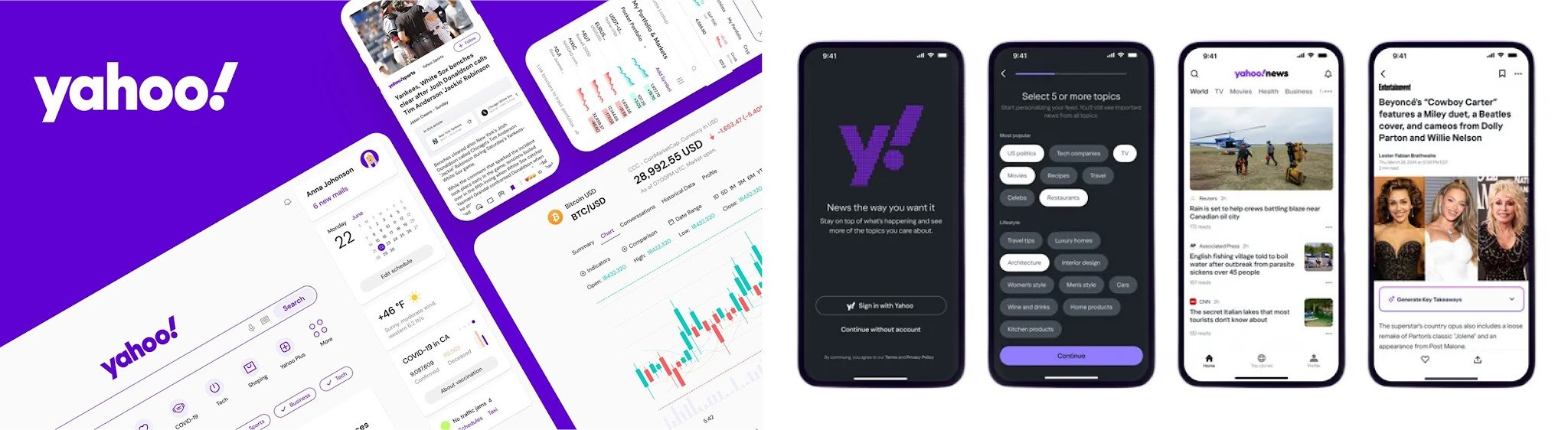
Yahoo experienced brand dilution as its flexible branding and repeated product launches lacked a unifying core identity. Over time, inconsistent brand messaging and shifting visual systems weakened brand perception, making it difficult for customers to understand what the brand stood for beyond a collection of unrelated services.
WeWork
WeWork’s rapid brand expansion relied on a highly flexible identity that adapted aggressively across markets and offerings. Without strong governance and standardized brand messaging, flexibility contributed to fragmented brand perception, reducing consumer trust and diminishing brand equity during periods of instability.
FAQs
How does flexible brand identity contribute to dilution?
Flexible brand identity contributes to dilution when variation is not constrained by clear rules, leading to inconsistent messaging and visual execution.
What’s the difference between dilution and dilution factor?
Dilution is the outcome of weakened brand equity, while dilution factor refers to the drivers and signals that increase the risk of dilution.
How can a brand detect early signs of dilution?
Early signs include inconsistent brand messaging, fragmented visual identity, and customer confusion revealed through research and audits.
Are there cases where dynamic branding doesn’t lead to dilution?
Yes. Dynamic branding works when flexibility is tightly governed and built on a stable core brand identity.

Masha is the founder of Bolder, a branding and communications agency for tech startups in AI, robotics, biotech, deep tech, and energy. She’s built three companies and leads a team of talented strategists and designers, helping technical founders turn hard to explain work into brands sharp enough to match the tech behind them.