


Let's begin with a recent study done by Lucidpress. The study showed that consistent branding increased business revenues by 10-20%. Also, 77% of B2B Marketing Leaders report that branding is crucial to growth.
It's clear! Branding should be a top priority for businesses.
However, we must recognize that branding has evolved beyond tactical and product-focused marketing where the goal was to push the product to consumers using channels such as Billboard, TV & radio, logos, and catchy taglines.
Today, branding is a more custom-driven strategy aimed at building a strong, cohesive, and lasting brand identity that resonates with consumers, differentiates the business from competitors, and drives long-term success. This article will discuss why strategic branding is important and how you can create one.
But before we learn how to create a strategic brand, let's get to understand the relationship between traditional marketing and strategic branding.
Traditional Marketing and Branding
What is Traditional marketing?
Traditional marketing refers to the use of any offline medium to promote goods and services or reach an audience. Some of the channels include print ads, newspaper ads, mail advertisements, billboards, radio and TV advertisements.
Traditional marketing became very popular due to the advertising boom of the 1950s, which came with the rise of TV. Other traditional channels, such as Billboard and Radio, existed. However, they had their limitations, especially with reach. Television allows businesses to connect with target audiences comfortably and directly.
The focus of traditional marketing was the product. Its messaging highlighted only product superiority. It promoted the features, benefits, and uniqueness and never addressed the needs, desires, interests or emotions of its customers, which was its major flaw.
How Large Companies Implemented Traditional Branding
Brand as a Signifier
Branding was a stamp of approval for the product made by that company. When counterfeits and low-quality imitations were everywhere, seeing a brand name meant you were buying an original. This built trust between the consumer and the company, as the consumer could rely on the brand to deliver what it promised.
Distinguishing Products
With mass production during the Industrial Revolution, markets got flooded with similar products. Branding helped consumers to differentiate between those products by clearly stating the source. This was crucial for companies to stand out in a crowded market.
Legal Protection
Companies registered their brands to protect them legally. This stopped other companies from using their brand and also reinforced the link between the brand and the company's products in the consumer's mind.
How Traditional Branding Evolved
Previously, companies let their brands grow and evolve slowly without a big overall plan. There was no real forward thinking of branding; decisions were made without longevity in perspective. Due to a lack of proper planning, there was no consistent brand image. Brand voice varies across different products and promotions.
Also, brands were passive; most of the branding was added to labels to show the manufacturers of the product, and there was little to no customer connection. As the 20th century dawned, branding expanded to include print media, using newspapers and magazines to distinguish between companies. By the 1920s, companies began leveraging radio to foster brand longevity in consumers' minds. The post-World War II era, between 1950 and 1960, marked the onset of modern branding techniques, including TV commercials, billboards, product packaging, subway signs, and bold architecture.
The Evolution of Strategic Branding
Strategic branding is the process of creating a long-term plan and setting goals to position your business as the top choice for your customers. It goes beyond creating websites and memorable logos; it's a holistic approach that focuses on creating positive emotional connections with customers. A comprehensive strategic plan should be your mission and vision and clearly define your market and unique value proposition.
Why Strategic Branding is important
Building Right Perception
Strategic branding allows you to clearly define your brand and make promises to your clients, customers, and your audience. If you properly articulate your brand, consistency is easier. So your audience knows what to expect when interacting with your product/services across all touch points. This builds trust, creates a positive image in the minds of your audience, and solidifies your reputation in the market.
Longer Term Relationships
Strategic branding creates familiarity between you and your audience, which fosters trust and brand loyalty. When your brand delivers consistently on its promises, it gives a reason to trust your brand and choose you over competitors. This trust can reduce price sensitivity as loyal customers will be willing to pay a premium, and your brand will stay at the top of their minds during purchase.
Competitive Edge
It's difficult to come up with a unique business idea. Chances are, other companies are offering similar products and services. Standing out and appealing to the audience requires significant effort. However, strategic branding helps you stand out from your competitors and helps you find your place in the market.
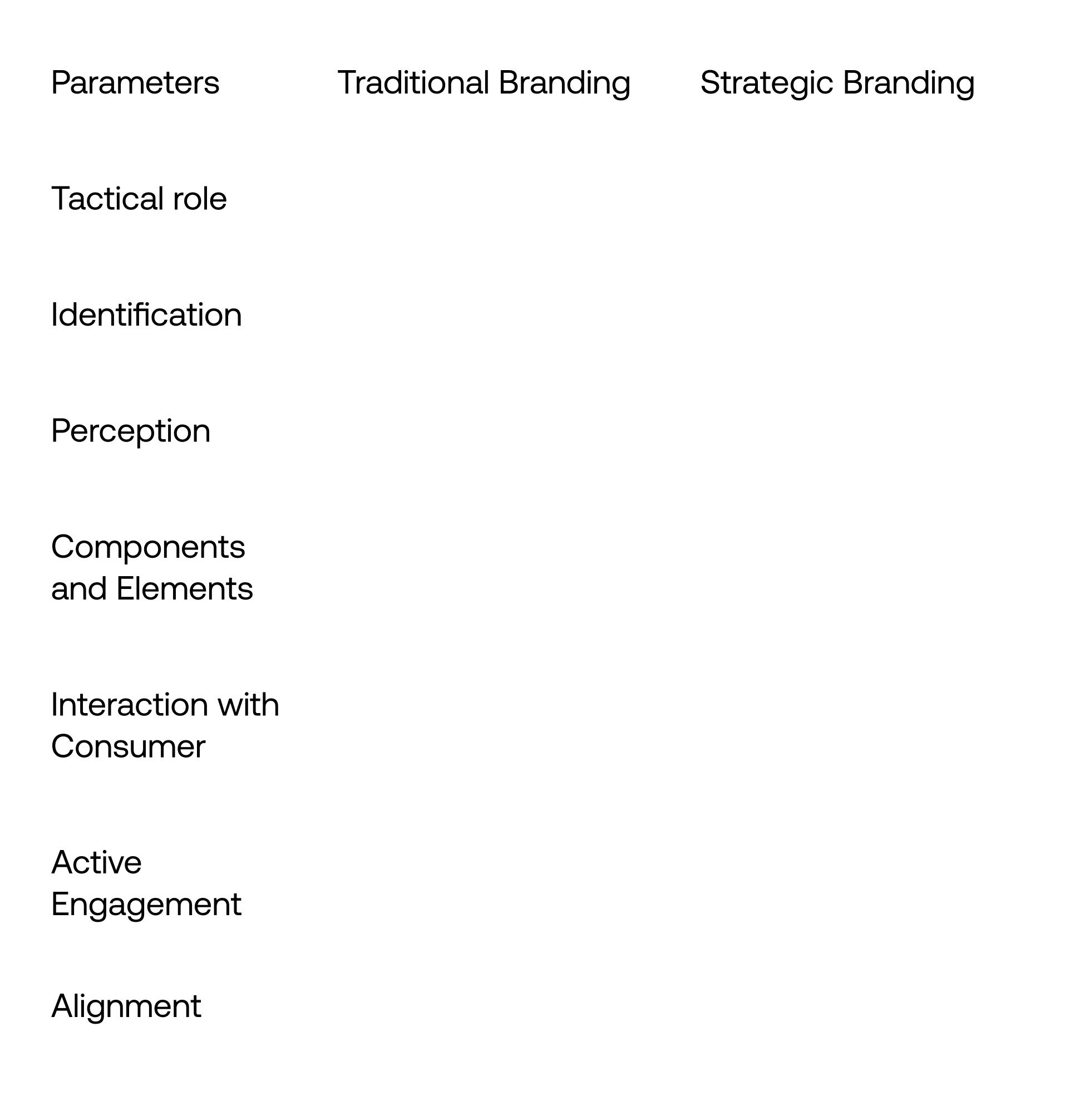
Key Differences Between Traditional and Strategic Branding
Continue Reading