
Save your dopamine
Company
Recircle
Industry
Climate Tech
AI
Solutions
Brand Strategy
The visibility engine powering B2B circular operations.
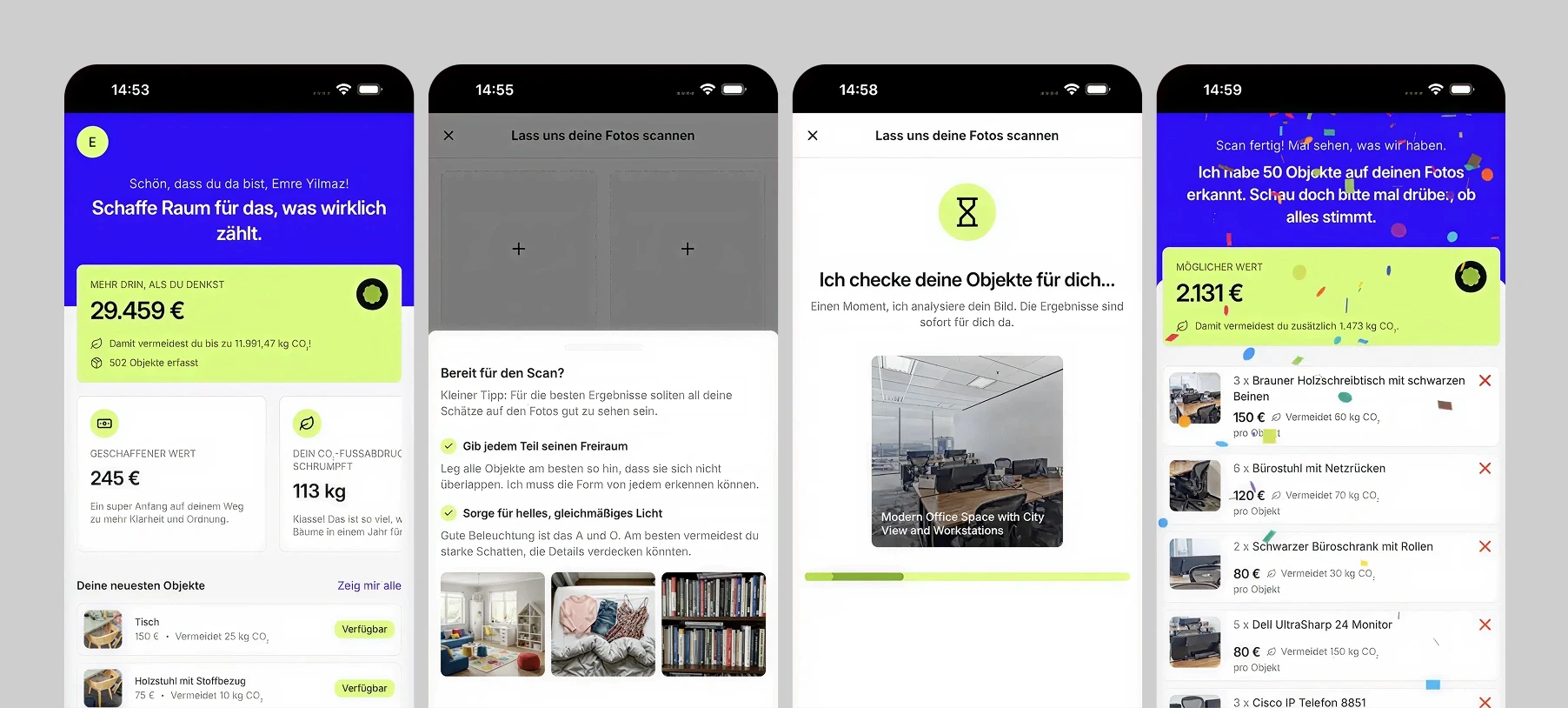
Recircle builds technology that turns everyday objects into data for circular systems. Their B2C app has a clear, lifestyle-based story: scan an item, declutter your home, feel better about your space. Their B2B offer was a different problem entirely.
The website described Recircle as "for everyone," with messaging that blurred the lines between consumer and business value. For potential recommerce platforms, recyclers, and recirculation partners, it was not clear what the API actually did, how the product was structured, or what impact it could deliver.
The friction showed up in the same questions, repeated across every sales conversation.
The Challenge
B2B prospects were stuck on fundamentals: Is this built for companies like ours, or just repurposed from a consumer app? What does the API actually do for our operations? Why should we trust this to solve a real problem rather than add complexity?
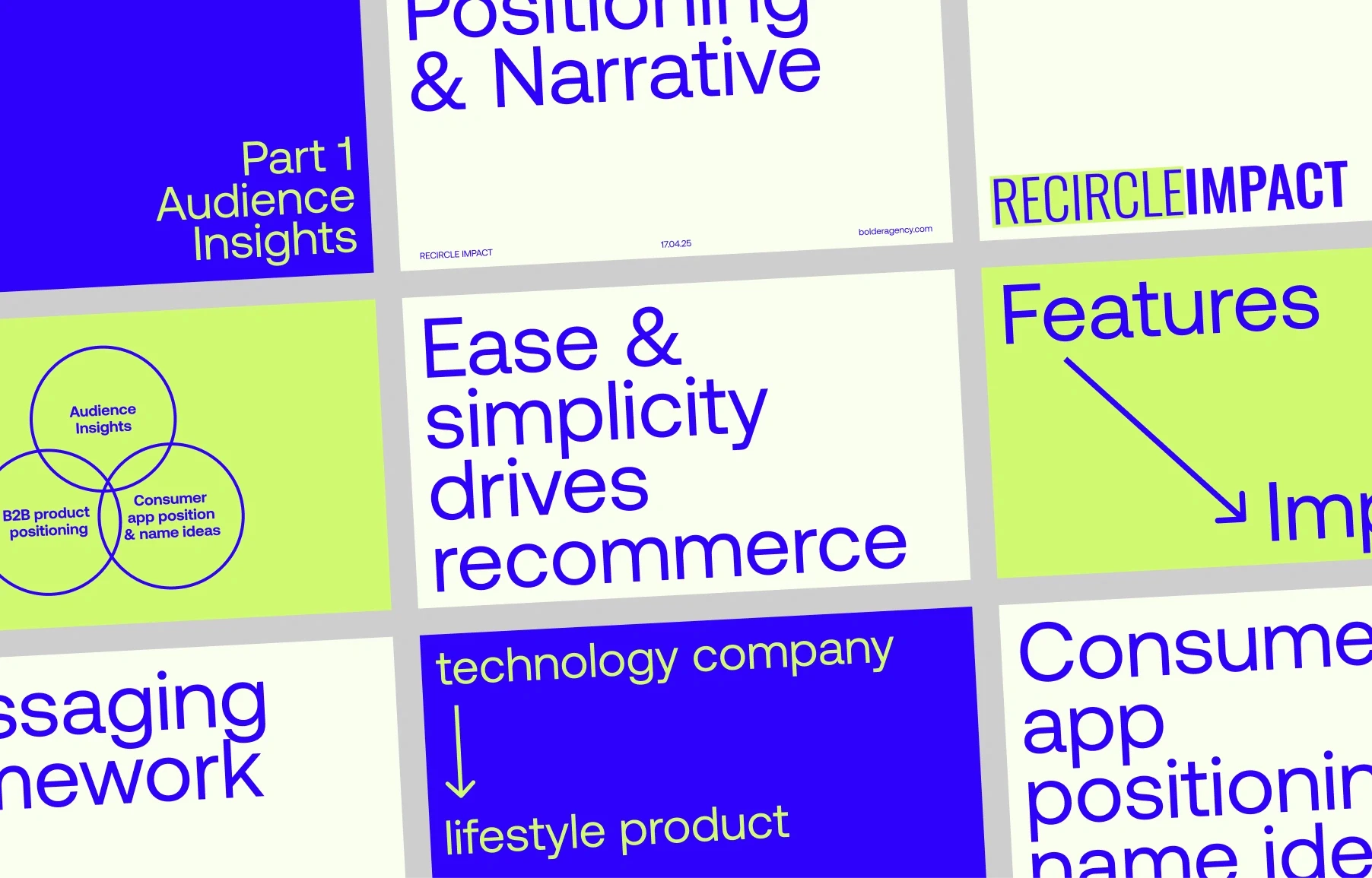
Internally, the team had no shared narrative or impact metrics to rally around. The B2C and B2B stories existed in parallel without a connecting logic. Our challenge was to build a positioning and messaging system for B2B that connected back to the consumer origin story, creating one cohesive brand instead of two loosely related products.
Research and Discovery
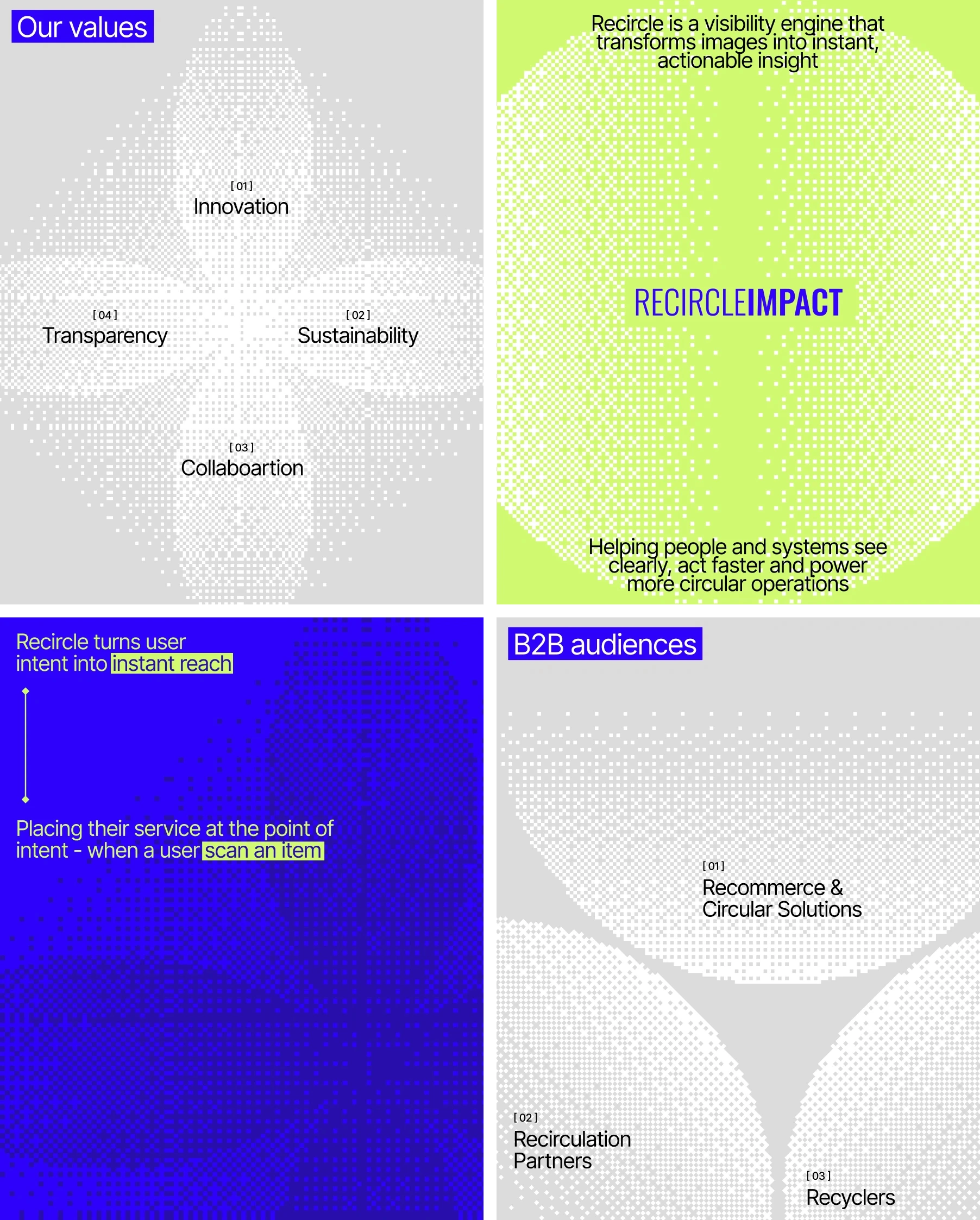
We started by mapping the reality of Recircle's ecosystem: three distinct B2B audiences, each with different operations, pain points, and success metrics. For each group we clarified who they are, how they work today, where friction appears, and what success actually looks like for them.
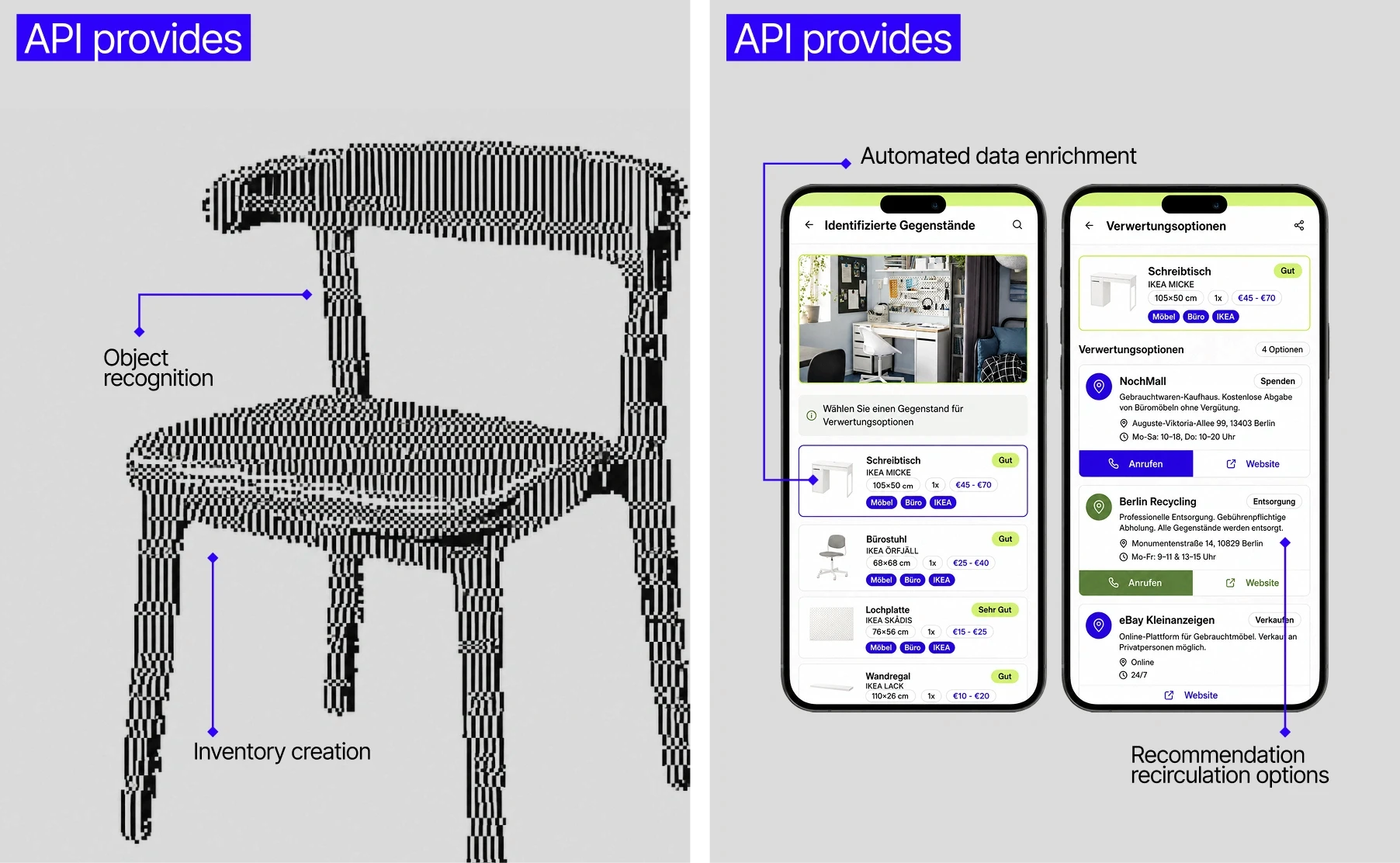
This work revealed the unifying insight. Recircle does not simply make things easier. It turns images into structured, actionable data that makes supply operations smarter, pickups more predictable, and recirculation more targeted. The product is not a tool layered on top of existing workflows. It is the visibility layer those workflows have been missing.
Positioning
From this we articulated a B2B product positioning around a single idea: Recircle as a visibility engine. AI models that transform photos of physical items into instant, actionable insight, enabling people and systems to see assets clearly and act faster.
This concept works across all three B2B audiences without forcing them into the same story. And it connects naturally back to the consumer side: the B2C promise of seeing the value in what you already own becomes, at the B2B level, seeing the value in what moves through your supply chain. Same core idea, different scale, different stakes.
Messaging Architecture
We then built a messaging framework and manifesto that shift the narrative from generic sustainability positioning to profitable, operational circularity. Each audience got its own concrete, business-focused value story built on the same strategic foundation.
Results
The result is a platform where B2B and B2C no longer pull in different directions. One brand, one underlying idea, with the flexibility to speak specifically to every audience it needs to reach.
Company
Recircle
Industry
Climate Tech
AI
Solutions
Brand Strategy
The visibility engine powering B2B circular operations.
Recircle builds technology that turns everyday objects into data for circular systems. Their B2C app has a clear, lifestyle-based story: scan an item, declutter your home, feel better about your space. Their B2B offer was a different problem entirely.
The website described Recircle as "for everyone," with messaging that blurred the lines between consumer and business value. For potential recommerce platforms, recyclers, and recirculation partners, it was not clear what the API actually did, how the product was structured, or what impact it could deliver.
The friction showed up in the same questions, repeated across every sales conversation.
The Challenge
B2B prospects were stuck on fundamentals: Is this built for companies like ours, or just repurposed from a consumer app? What does the API actually do for our operations? Why should we trust this to solve a real problem rather than add complexity?
Internally, the team had no shared narrative or impact metrics to rally around. The B2C and B2B stories existed in parallel without a connecting logic. Our challenge was to build a positioning and messaging system for B2B that connected back to the consumer origin story, creating one cohesive brand instead of two loosely related products.
Research and Discovery
We started by mapping the reality of Recircle's ecosystem: three distinct B2B audiences, each with different operations, pain points, and success metrics. For each group we clarified who they are, how they work today, where friction appears, and what success actually looks like for them.
This work revealed the unifying insight. Recircle does not simply make things easier. It turns images into structured, actionable data that makes supply operations smarter, pickups more predictable, and recirculation more targeted. The product is not a tool layered on top of existing workflows. It is the visibility layer those workflows have been missing.
Positioning
From this we articulated a B2B product positioning around a single idea: Recircle as a visibility engine. AI models that transform photos of physical items into instant, actionable insight, enabling people and systems to see assets clearly and act faster.
This concept works across all three B2B audiences without forcing them into the same story. And it connects naturally back to the consumer side: the B2C promise of seeing the value in what you already own becomes, at the B2B level, seeing the value in what moves through your supply chain. Same core idea, different scale, different stakes.
Messaging Architecture
We then built a messaging framework and manifesto that shift the narrative from generic sustainability positioning to profitable, operational circularity. Each audience got its own concrete, business-focused value story built on the same strategic foundation.
Results
The result is a platform where B2B and B2C no longer pull in different directions. One brand, one underlying idea, with the flexibility to speak specifically to every audience it needs to reach.
Company
Recircle
Industry
Climate Tech
AI
Solutions
Brand Strategy
The visibility engine powering B2B circular operations.
Recircle builds technology that turns everyday objects into data for circular systems. Their B2C app has a clear, lifestyle-based story: scan an item, declutter your home, feel better about your space. Their B2B offer was a different problem entirely.
The website described Recircle as "for everyone," with messaging that blurred the lines between consumer and business value. For potential recommerce platforms, recyclers, and recirculation partners, it was not clear what the API actually did, how the product was structured, or what impact it could deliver.
The friction showed up in the same questions, repeated across every sales conversation.
The Challenge
B2B prospects were stuck on fundamentals: Is this built for companies like ours, or just repurposed from a consumer app? What does the API actually do for our operations? Why should we trust this to solve a real problem rather than add complexity?
Internally, the team had no shared narrative or impact metrics to rally around. The B2C and B2B stories existed in parallel without a connecting logic. Our challenge was to build a positioning and messaging system for B2B that connected back to the consumer origin story, creating one cohesive brand instead of two loosely related products.
Research and Discovery
We started by mapping the reality of Recircle's ecosystem: three distinct B2B audiences, each with different operations, pain points, and success metrics. For each group we clarified who they are, how they work today, where friction appears, and what success actually looks like for them.
This work revealed the unifying insight. Recircle does not simply make things easier. It turns images into structured, actionable data that makes supply operations smarter, pickups more predictable, and recirculation more targeted. The product is not a tool layered on top of existing workflows. It is the visibility layer those workflows have been missing.
Positioning
From this we articulated a B2B product positioning around a single idea: Recircle as a visibility engine. AI models that transform photos of physical items into instant, actionable insight, enabling people and systems to see assets clearly and act faster.
This concept works across all three B2B audiences without forcing them into the same story. And it connects naturally back to the consumer side: the B2C promise of seeing the value in what you already own becomes, at the B2B level, seeing the value in what moves through your supply chain. Same core idea, different scale, different stakes.
Messaging Architecture
We then built a messaging framework and manifesto that shift the narrative from generic sustainability positioning to profitable, operational circularity. Each audience got its own concrete, business-focused value story built on the same strategic foundation.
Results
The result is a platform where B2B and B2C no longer pull in different directions. One brand, one underlying idea, with the flexibility to speak specifically to every audience it needs to reach.