
Save your dopamine
Company
emote Care
Industry
Mental Health Tech
SaaS
Solutions
Brand Strategy
Building a brand that earns trust on both sides of the therapy relationship.
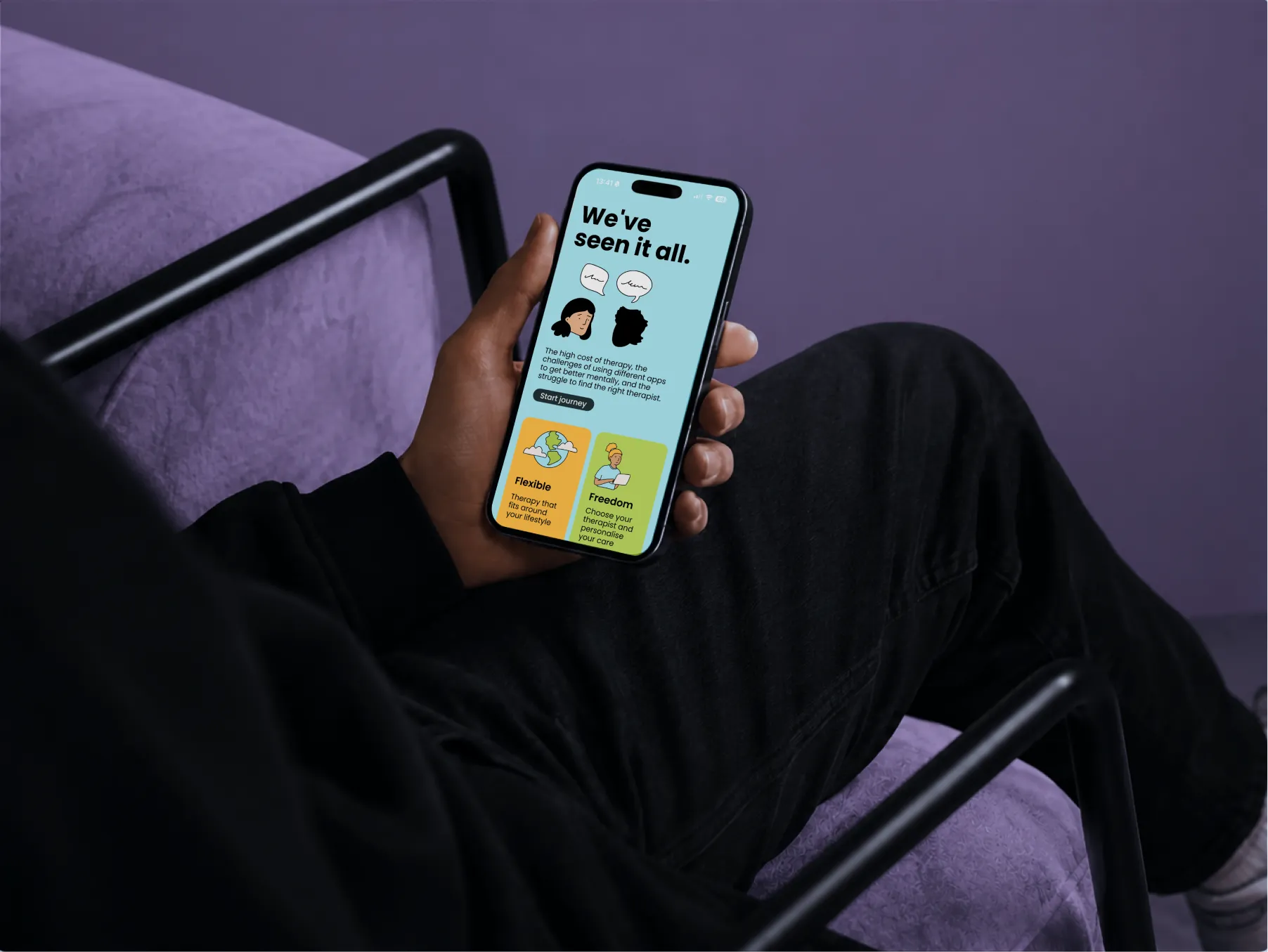
emote Care is a therapy and wellbeing platform that connects diverse communities with mental health support, with a strong emphasis on data privacy and security. The product sits at the crossroads of tech and care: it has to feel safe, human, and empowering for both therapists and clients, while also communicating a sophisticated data and product architecture.
The market is crowded with wellbeing apps, therapists are in short supply and many are unhappy with existing platforms, and clients struggle to find a good match across lines of identity and experience. Building a brand that speaks honestly to both sides of this relationship, without defaulting to corporate wellness language, was the core challenge.

The Challenge
The tension in the market was clear from the start. Therapists are under-supported, stretched across administrative work that pulls them away from actual care. Clients face a fragmented landscape where finding the right match across identity, background, and lived experience is genuinely hard.
And data privacy, while critical to the entire ecosystem, had become a talking point rather than a trust signal: platforms said the right things and delivered very little.And data privacy, while critical to the entire ecosystem, had become a talking point rather than a trust signal: platforms said the right things and delivered very little.
emote Care needed a brand strategy that aligned its mission with real motivations on both sides, and a narrative that felt warm, specific, and genuinely different from the category's default register.
Research and Discovery
We started with deep research: analysing 40+ interviews with clients and therapists, reviewing competitors, and running team interviews and a workshop to anchor everything in emote Care's mission and values. This gave us a precise picture of where the category was failing: under-supported therapists with no real community, clients who couldn't find a match that reflected their identity, and a gap between how loudly platforms talked about privacy and how little trust they actually earned.
The research didn't just inform the strategy. It became the foundation of the narrative.
Brand Strategy
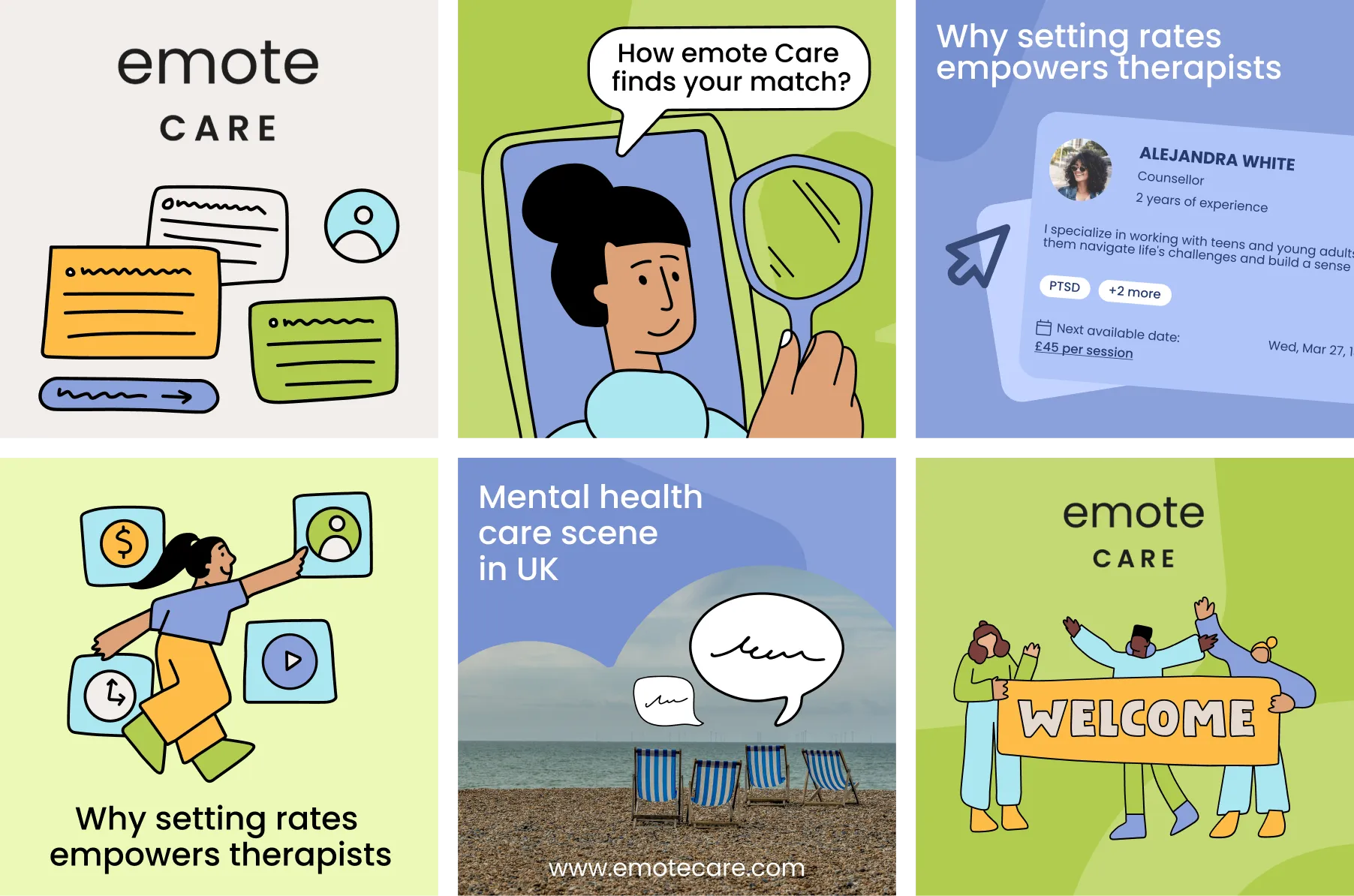
On this foundation we built a brand platform that positions emote Care as a space where both sides of the relationship are genuinely respected. Not a marketplace that treats therapists as supply and clients as demand, but a platform built around the quality of the connection itself.
For therapists, the brand emphasises validation, streamlined tools, and a supportive community that helps them deliver maximum value without burning out. For clients, it focuses on global accessibility and better matching across lines of identity and lived experience.
Narrative and Tone of Voice
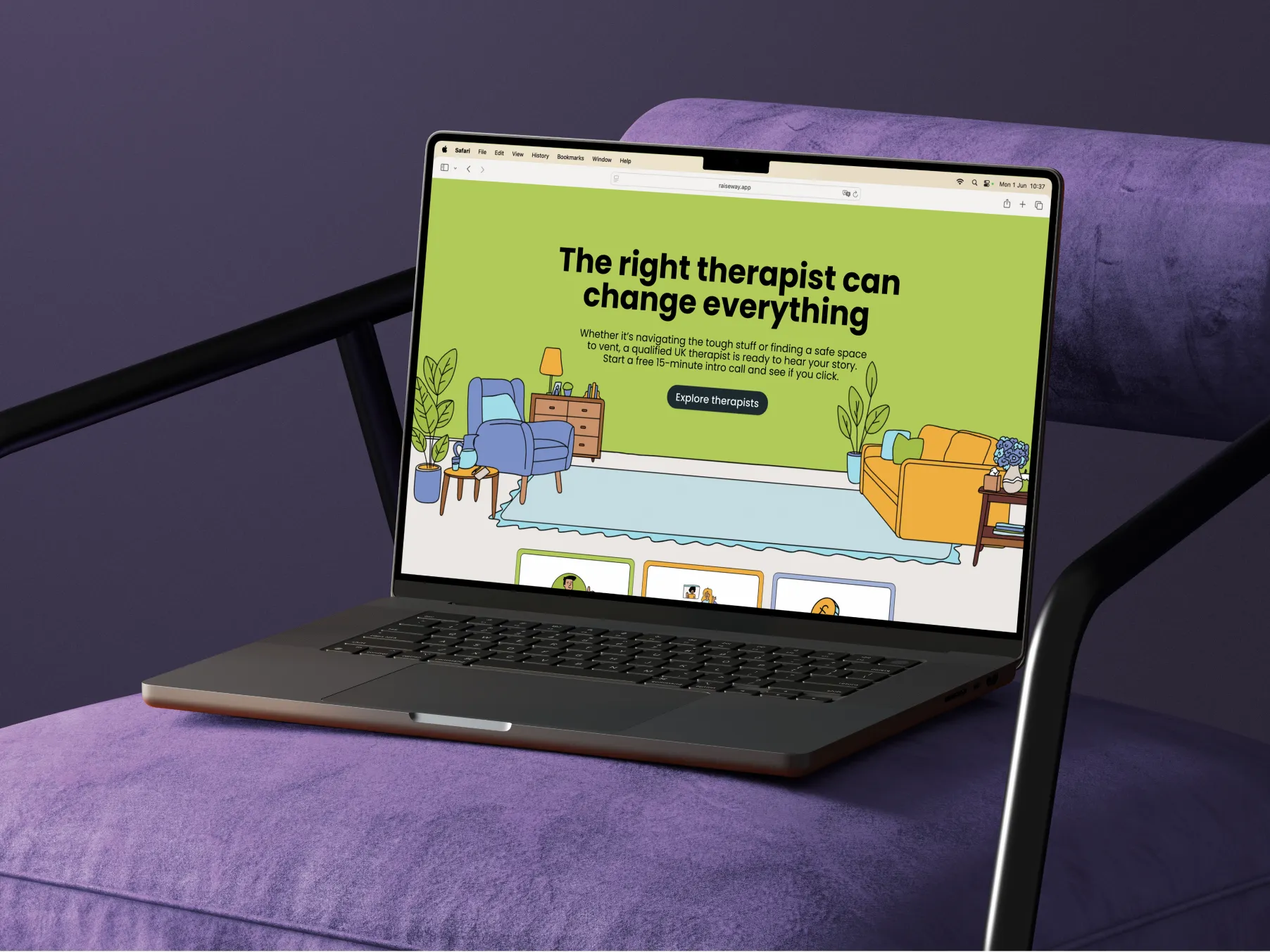
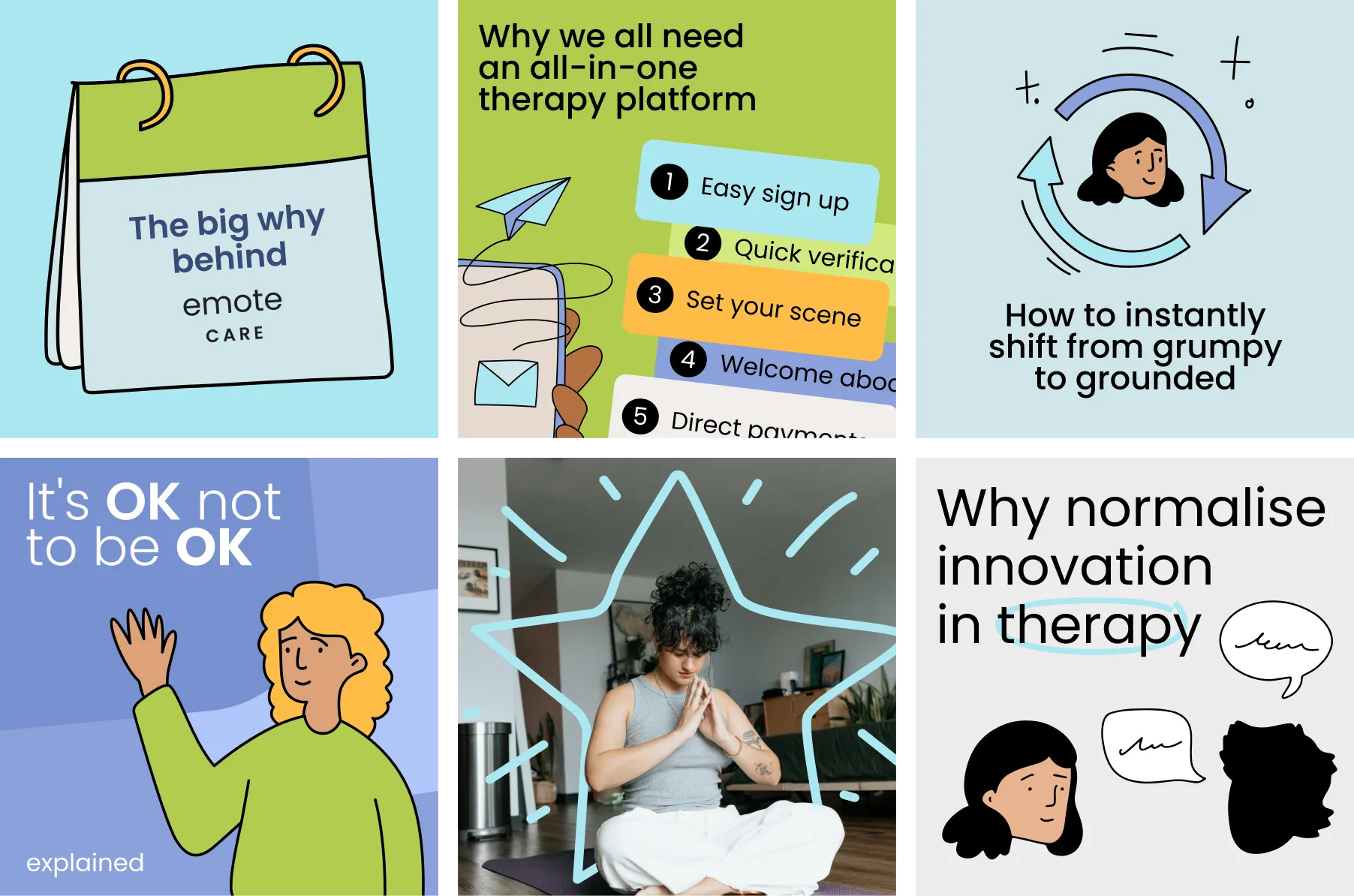
The tone of voice was one of the most deliberate decisions in the project. Mental health platforms tend to speak in one of two registers: clinical and distant, or aggressively warm in a way that feels performed. emote Care needed something different: a voice that sounds like a real person, not a system. Simple, direct, and genuinely caring without the corporate wellness veneer.
This meant cutting jargon at every level: in headlines, in product copy, in how privacy and security were communicated. The privacy promise in particular needed to move from a compliance statement to a felt experience, something the brand demonstrated through tone and consistency rather than just claimed in a terms page.
Messaging Architecture
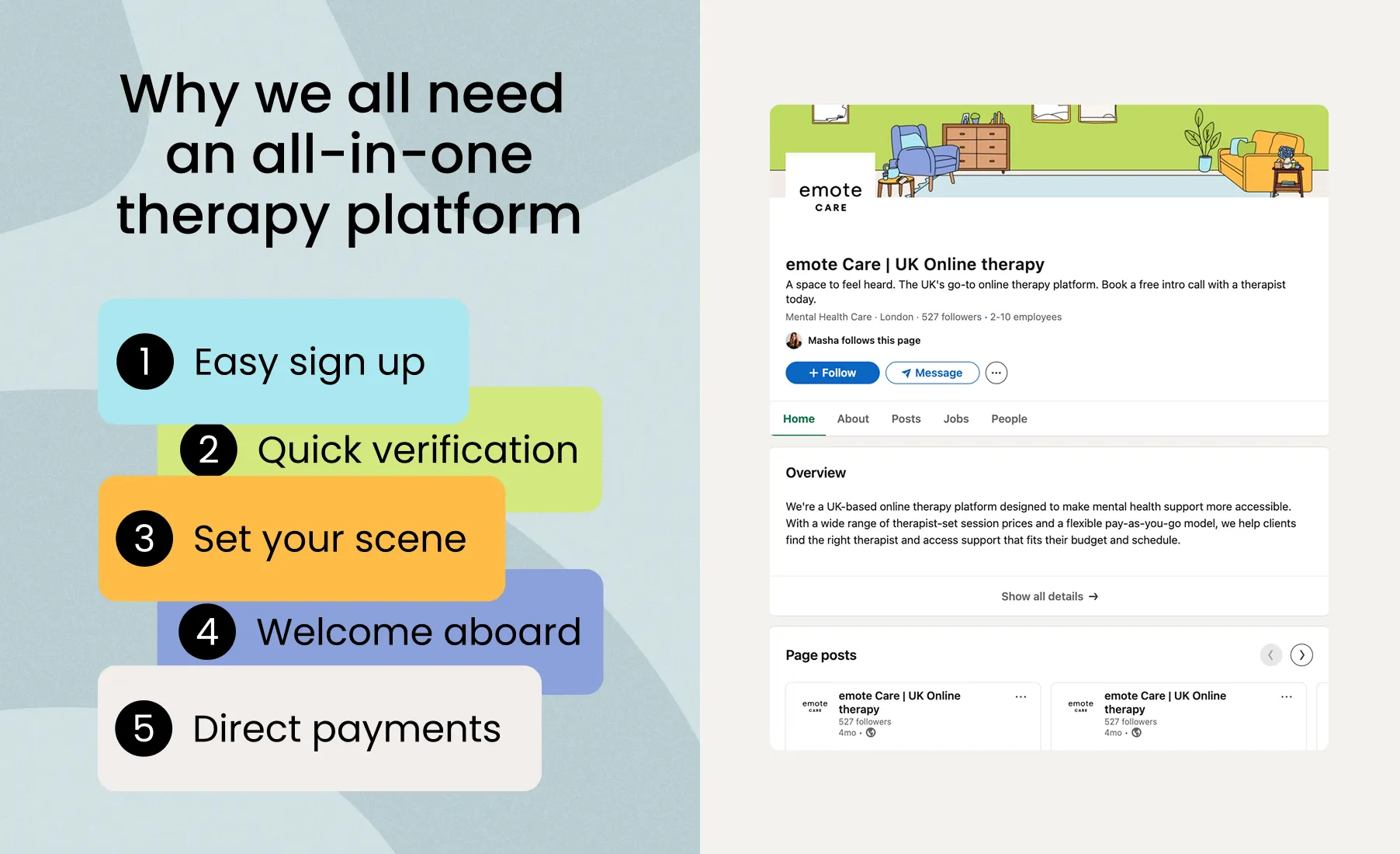
We translated the brand platform into a communication strategy for two core audiences: therapists and clients. A communication matrix maps every stage of interaction for both groups, from first awareness through onboarding and ongoing use. Brand pillars anchor all messaging and ensure that the tech, the privacy promise, and the emotional experience point in the same direction across every touchpoint.
Results
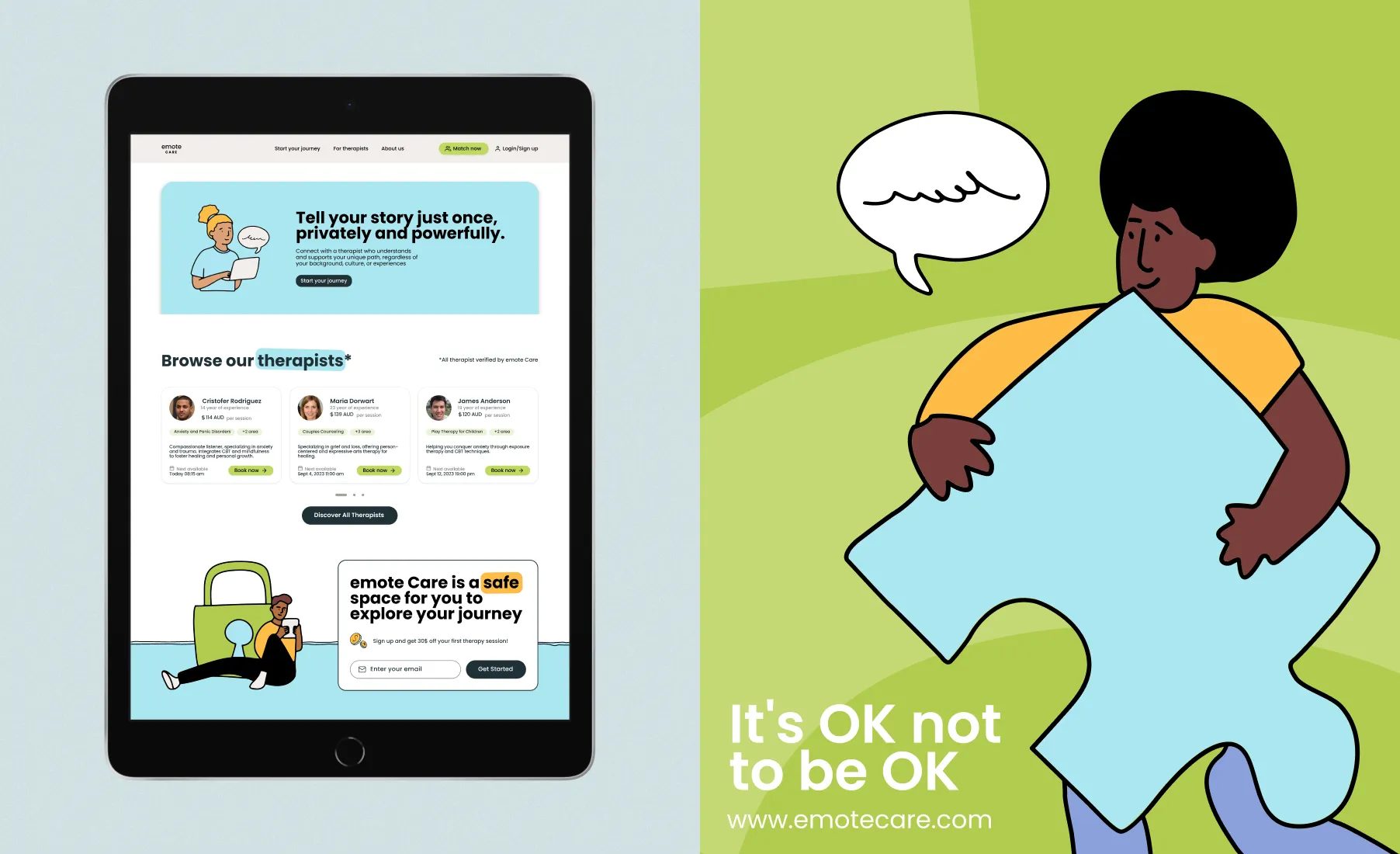
The result is a strategy where care, support, and empowerment aren't just values listed on an about page. They show up in the language, the structure, and the logic of how the brand talks to the people it serves.
Company
emote Care
Industry
Mental Health Tech
SaaS
Solutions
Brand Strategy
Building a brand that earns trust on both sides of the therapy relationship.
emote Care is a therapy and wellbeing platform that connects diverse communities with mental health support, with a strong emphasis on data privacy and security. The product sits at the crossroads of tech and care: it has to feel safe, human, and empowering for both therapists and clients, while also communicating a sophisticated data and product architecture.
The market is crowded with wellbeing apps, therapists are in short supply and many are unhappy with existing platforms, and clients struggle to find a good match across lines of identity and experience. Building a brand that speaks honestly to both sides of this relationship, without defaulting to corporate wellness language, was the core challenge.
The Challenge
The tension in the market was clear from the start. Therapists are under-supported, stretched across administrative work that pulls them away from actual care. Clients face a fragmented landscape where finding the right match across identity, background, and lived experience is genuinely hard.
And data privacy, while critical to the entire ecosystem, had become a talking point rather than a trust signal: platforms said the right things and delivered very little.And data privacy, while critical to the entire ecosystem, had become a talking point rather than a trust signal: platforms said the right things and delivered very little.
emote Care needed a brand strategy that aligned its mission with real motivations on both sides, and a narrative that felt warm, specific, and genuinely different from the category's default register.
Research and Discovery
We started with deep research: analysing 40+ interviews with clients and therapists, reviewing competitors, and running team interviews and a workshop to anchor everything in emote Care's mission and values. This gave us a precise picture of where the category was failing: under-supported therapists with no real community, clients who couldn't find a match that reflected their identity, and a gap between how loudly platforms talked about privacy and how little trust they actually earned.
The research didn't just inform the strategy. It became the foundation of the narrative.
Brand Strategy
On this foundation we built a brand platform that positions emote Care as a space where both sides of the relationship are genuinely respected. Not a marketplace that treats therapists as supply and clients as demand, but a platform built around the quality of the connection itself.
For therapists, the brand emphasises validation, streamlined tools, and a supportive community that helps them deliver maximum value without burning out. For clients, it focuses on global accessibility and better matching across lines of identity and lived experience.
Narrative and Tone of Voice
The tone of voice was one of the most deliberate decisions in the project. Mental health platforms tend to speak in one of two registers: clinical and distant, or aggressively warm in a way that feels performed. emote Care needed something different: a voice that sounds like a real person, not a system. Simple, direct, and genuinely caring without the corporate wellness veneer.
This meant cutting jargon at every level: in headlines, in product copy, in how privacy and security were communicated. The privacy promise in particular needed to move from a compliance statement to a felt experience, something the brand demonstrated through tone and consistency rather than just claimed in a terms page.
Messaging Architecture
We translated the brand platform into a communication strategy for two core audiences: therapists and clients. A communication matrix maps every stage of interaction for both groups, from first awareness through onboarding and ongoing use. Brand pillars anchor all messaging and ensure that the tech, the privacy promise, and the emotional experience point in the same direction across every touchpoint.
Results
The result is a strategy where care, support, and empowerment aren't just values listed on an about page. They show up in the language, the structure, and the logic of how the brand talks to the people it serves.
Company
emote Care
Industry
Mental Health Tech
SaaS
Solutions
Brand Strategy
Building a brand that earns trust on both sides of the therapy relationship.
emote Care is a therapy and wellbeing platform that connects diverse communities with mental health support, with a strong emphasis on data privacy and security. The product sits at the crossroads of tech and care: it has to feel safe, human, and empowering for both therapists and clients, while also communicating a sophisticated data and product architecture.
The market is crowded with wellbeing apps, therapists are in short supply and many are unhappy with existing platforms, and clients struggle to find a good match across lines of identity and experience. Building a brand that speaks honestly to both sides of this relationship, without defaulting to corporate wellness language, was the core challenge.
The Challenge
The tension in the market was clear from the start. Therapists are under-supported, stretched across administrative work that pulls them away from actual care. Clients face a fragmented landscape where finding the right match across identity, background, and lived experience is genuinely hard.
And data privacy, while critical to the entire ecosystem, had become a talking point rather than a trust signal: platforms said the right things and delivered very little.And data privacy, while critical to the entire ecosystem, had become a talking point rather than a trust signal: platforms said the right things and delivered very little.
emote Care needed a brand strategy that aligned its mission with real motivations on both sides, and a narrative that felt warm, specific, and genuinely different from the category's default register.
Research and Discovery
We started with deep research: analysing 40+ interviews with clients and therapists, reviewing competitors, and running team interviews and a workshop to anchor everything in emote Care's mission and values. This gave us a precise picture of where the category was failing: under-supported therapists with no real community, clients who couldn't find a match that reflected their identity, and a gap between how loudly platforms talked about privacy and how little trust they actually earned.
The research didn't just inform the strategy. It became the foundation of the narrative.
Brand Strategy
On this foundation we built a brand platform that positions emote Care as a space where both sides of the relationship are genuinely respected. Not a marketplace that treats therapists as supply and clients as demand, but a platform built around the quality of the connection itself.
For therapists, the brand emphasises validation, streamlined tools, and a supportive community that helps them deliver maximum value without burning out. For clients, it focuses on global accessibility and better matching across lines of identity and lived experience.
Narrative and Tone of Voice
The tone of voice was one of the most deliberate decisions in the project. Mental health platforms tend to speak in one of two registers: clinical and distant, or aggressively warm in a way that feels performed. emote Care needed something different: a voice that sounds like a real person, not a system. Simple, direct, and genuinely caring without the corporate wellness veneer.
This meant cutting jargon at every level: in headlines, in product copy, in how privacy and security were communicated. The privacy promise in particular needed to move from a compliance statement to a felt experience, something the brand demonstrated through tone and consistency rather than just claimed in a terms page.
Messaging Architecture
We translated the brand platform into a communication strategy for two core audiences: therapists and clients. A communication matrix maps every stage of interaction for both groups, from first awareness through onboarding and ongoing use. Brand pillars anchor all messaging and ensure that the tech, the privacy promise, and the emotional experience point in the same direction across every touchpoint.
Results
The result is a strategy where care, support, and empowerment aren't just values listed on an about page. They show up in the language, the structure, and the logic of how the brand talks to the people it serves.