
Why Branding Is a Long-Term Business Investment
In the digital age, branding is often misunderstood as a short-term marketing effort or a visual exercise focused on logos, colors and marketing materials. However, investing in branding is more than just spending money on visuals; it's about building a long term asset that delivers ongoing value to the business. For B2B companies, this narrow view creates a fundamental strategic mistake. Branding is not a campaign and not a tactical layer that can be switched on and off. It is a long term business investment that shapes how a company is perceived, how it competes and how it sustains growth over time.
Brand building influences financial performance in ways that are not always immediately visible. Brand investment pays off across the entire funnel, filling the top of the funnel with more and better leads. A strong brand reduces friction in the buying process, creates emotional connection with consumers by shaping their perceptions and trust, and supports recurring sales and repeat business. While marketing tactics may drive short term demand, brand strategy builds a durable foundation that allows a company to stand out, build trust and achieve lasting growth in competitive markets.
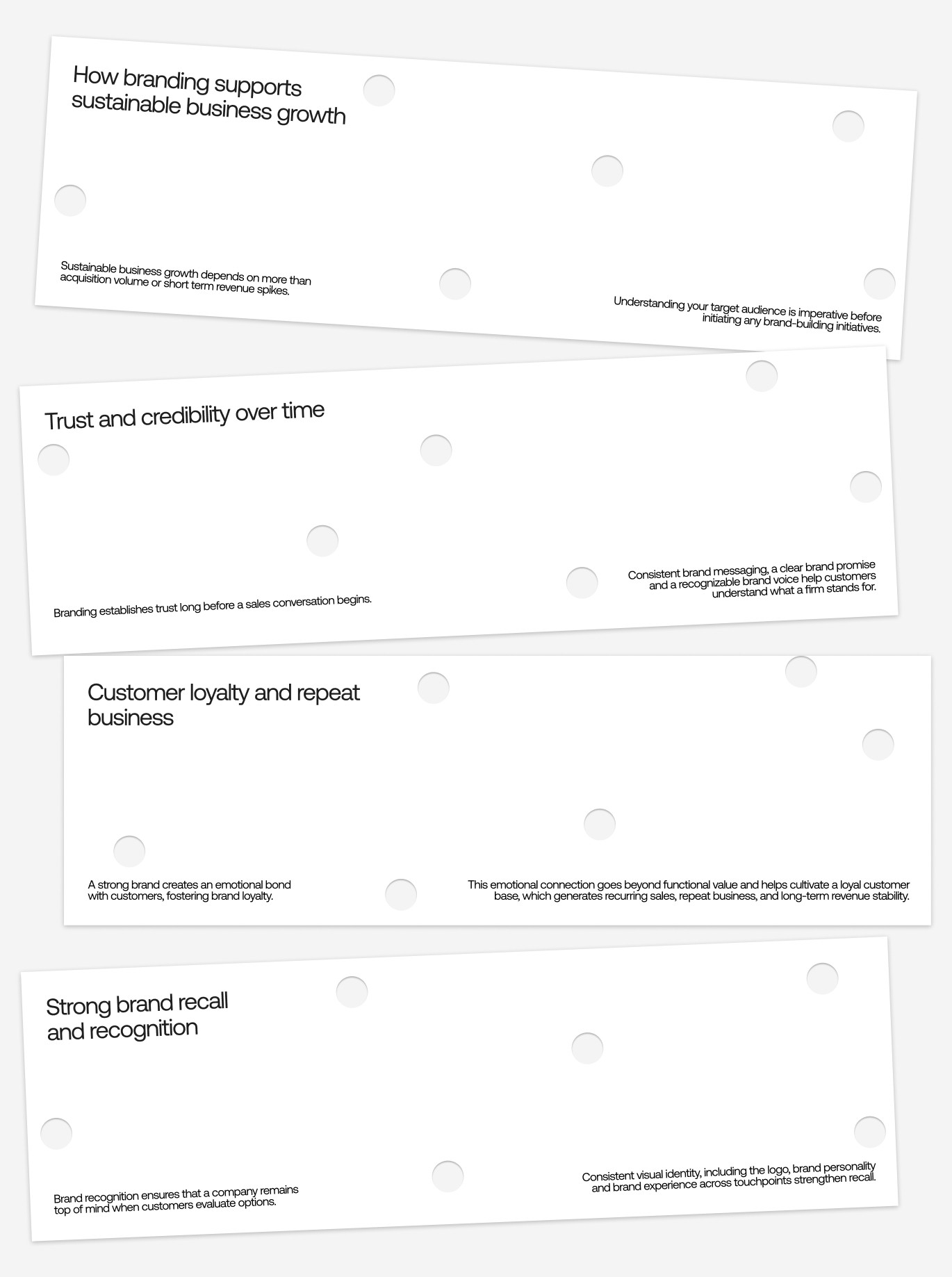
How Branding Supports Sustainable Business Growth
Sustainable business growth depends on more than acquisition volume or short term revenue spikes. Understanding your target audience is imperative before initiating any brand-building initiatives. It depends on whether a company can consistently attract the right target audience, meet expectations and maintain relevance over time. The benefit of strong branding is that it lays the foundation for sustainable growth by building trust, credibility, and long-term competitive advantage.
Trust and credibility over time
Branding establishes trust long before a sales conversation begins. Consistent brand messaging, a clear brand promise and a recognizable brand voice help customers understand what a firm stands for. In B2B markets, where purchasing decisions are often complex and involve multiple stakeholders, trust reduces perceived risk and accelerates decision making. A strong brand makes the decision easier for all stakeholders, aligning them faster.
Customer loyalty and repeat business
A strong brand creates an emotional bond with customers, fostering brand loyalty. This emotional connection goes beyond functional value and helps cultivate a loyal customer base, which generates recurring sales, repeat business, and long-term revenue stability. In fact, customer lifetime value (LTV) can be significantly higher—up to 306%—for consumers who connect emotionally with a brand compared to those who do not. Over time, customer loyalty becomes a key driver of financial benefits and growth.
Strong brand recall and recognition
Brand recognition ensures that a company remains top of mind when customers evaluate options. Consistent visual identity, including the logo, brand personality and brand experience across touchpoints strengthen recall. Product packaging also plays a crucial role in brand recognition, as distinctive packaging design creates a memorable impression and reinforces the brand in customers' minds. In competitive environments, brand recall often determines which firms are even considered, making it a table stakes requirement for sustained growth.
Branding ROI, Value That Compounds Over Time
The ROI of branding does not follow the same logic as short term marketing efforts. Brand marketing yields exponentially higher returns in reputation and market share over time due to its compound interest effect. Its brand value compounds gradually, strengthening the company’s position year after year.
Reduced customer acquisition costs
Strong brands require less effort to convert prospects. When customers already understand the brand’s unique value and trust its promise, acquisition becomes more efficient. Over time, this reduces customer acquisition costs and improves the overall efficiency of marketing efforts.
Higher conversion and retention rates
Brand equity influences both conversion and retention. Customers who recognize and trust a brand are more likely to convert and more likely to stay. This creates a virtuous cycle where loyalty and brand recognition reinforce each other, supporting optimal results across the customer lifecycle.
Stronger perceived value and premium pricing
Brands with strong emotional connections and clear positioning can command premium prices. Strong brands can command premium prices due to increased customer trust and loyalty. Perceived value allows firms to compete on more than price alone, protecting margins and supporting long term profitability. Strong brands can command premium prices because customers are less likely to doubt the value they bring. In crowded markets, pricing power becomes a critical competitive edge, helping businesses keep more money and support profitability.
Branding Builds Competitive Advantage
In markets defined by increasing competition and product parity, branding becomes a primary source of differentiation. A strong brand makes all your demand efforts more effective by increasing recognition and trust. Other efforts, such as marketing campaigns and community-building, can further support a long-term brand strategy.
Clear differentiation in crowded markets
Brand strategy defines how a company positions itself relative to competitors. A deep understanding of the target market, customer expectations and competitive context allows brands to communicate what makes them different. This differentiation goes beyond product features and focuses on meaning, experience and value.
Consistent brand positioning
Consistency across brand work, messaging, and marketing materials—including the brand's tone—reinforces credibility. When a brand’s personality, tone, voice, and visual identity remain aligned across channels, customers experience clarity rather than confusion. Consistency in branding is a leading driver of revenue growth in 2026, facilitating customer trust and reducing hesitation. This consistency strengthens brand equity and reinforces trust.
Reduced dependence on paid marketing
As brand recognition grows and the brand continues to develop, companies rely less on paid tactics to generate demand. Organic visibility, referrals and direct demand increase, allowing firms to allocate resources more strategically and reduce long term marketing spend.
In 2026, it is projected that strong brands will outperform performance-only tactics as the most reliable driver of long-term growth.
Why Branding Is a Strategic Business Investment
Branding should be treated as a core business asset, not a supporting function. Its impact extends across teams, operations, and the firm's market power and long term valuation. Branding is a long term asset that contributes to sustained financial health and customer loyalty.
In 2026, branding will be viewed as a load-bearing identity structure for businesses, essential for long-term survival.
Supports scalability and expansion
As companies grow, branding provides a stable foundation that supports expansion into new markets and segments. A clear brand strategy ensures that growth does not dilute meaning or confuse the audience.
Aligns teams and decision making
A well defined brand identity aligns leadership, marketing, sales and product teams around shared principles. For a chief marketing officer and executive leadership, branding becomes a strategic tool that guides decisions and prioritization.
Increases long term business value
Brand equity contributes directly to company valuation. Investors and buyers view strong brands as long term assets that reduce risk, stabilize revenue and support future growth. In this sense, branding is an investment that continues to deliver value long after initial efforts are complete.
Brand Strategy Examples
Salesforce
Salesforce is a great example of long term brand building in B2B. By consistently reinforcing its brand promise around customer success and trust, the company created a strong emotional connection with clients. This consistency across brand voice, messaging and experience supported lasting growth and positioned Salesforce as a category leader.
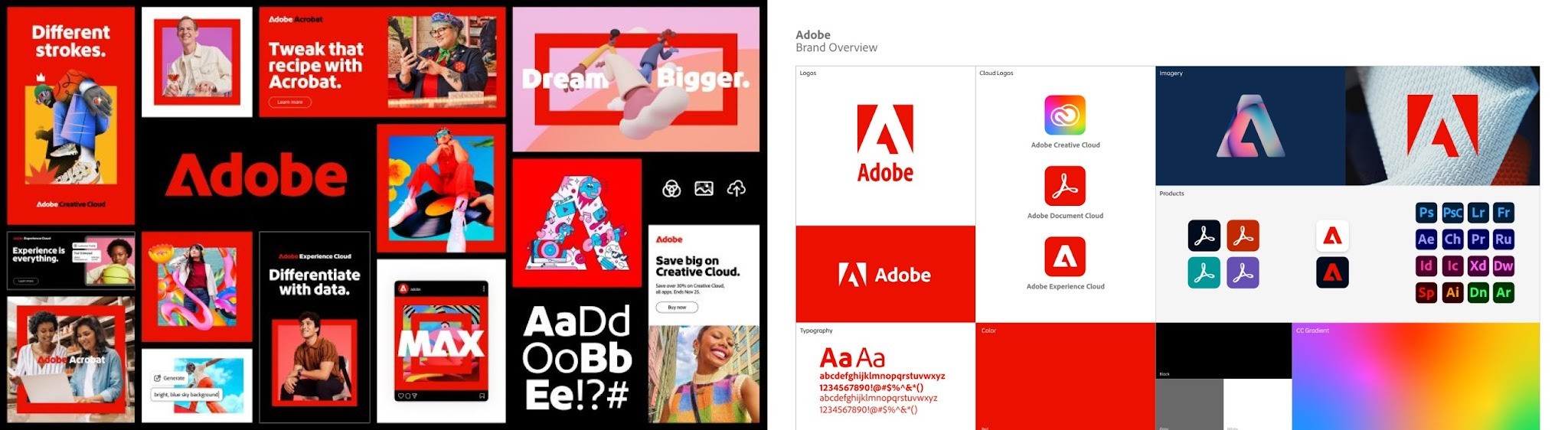
Adobe
Adobe demonstrates how brand investment supports business transformation. As the company shifted from packaged software to a subscription model, its brand strategy evolved to emphasize creativity, accessibility and value. This clear positioning helped maintain loyalty, strengthen brand equity and support recurring revenue at scale.
FAQs
Why do companies invest in branding?
Companies invest in branding to build trust, differentiate from competitors and create long term value that supports sustainable growth.
What is a long term investment in business?
A long term investment is an asset that continues to deliver value over time, rather than producing only short term results. Branding fits this definition by strengthening loyalty, recognition and financial performance.
What makes a company a good long term investment?
Strong fundamentals, loyal customers, consistent strategy and high brand equity all contribute to long term success.
Why is branding important for businesses?
Branding shapes perception, builds trust and influences purchasing decisions, making it essential for growth and competition.
What is the ROI of branding for businesses?
Branding ROI appears through reduced acquisition costs, higher retention, pricing power and increased lifetime value.
Is branding more important than marketing in the long run?
Marketing drives short term demand, while branding builds the foundation that makes marketing more effective over time.
How does branding impact business growth?
Branding supports growth by attracting the right audience, building loyalty and creating a durable competitive edge.

Masha is the founder of Bolder, a branding and communications agency for tech startups in AI, robotics, biotech, deep tech, and energy. She’s built three companies and leads a team of talented strategists and designers, helping technical founders turn hard to explain work into brands sharp enough to match the tech behind them.