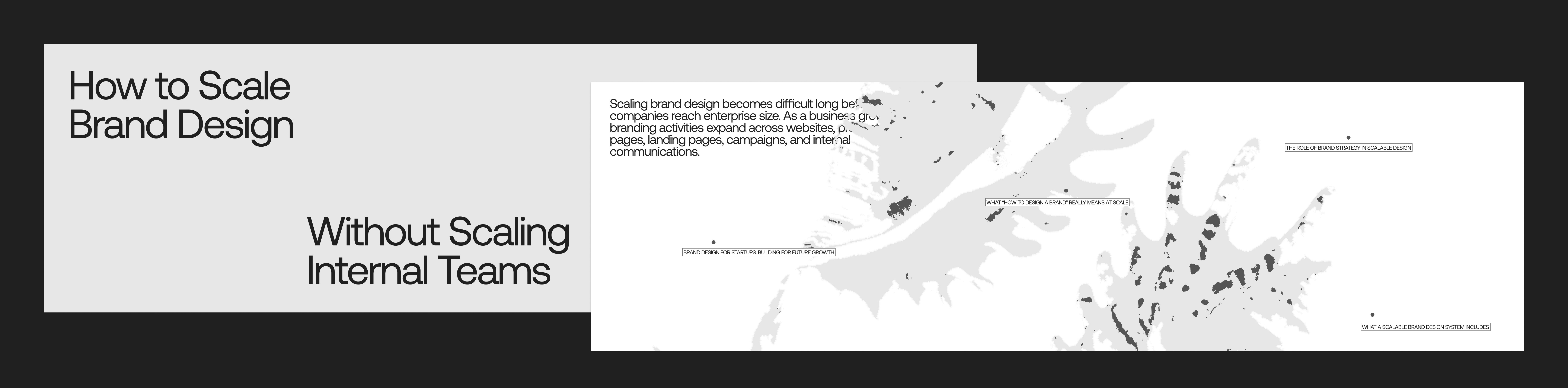
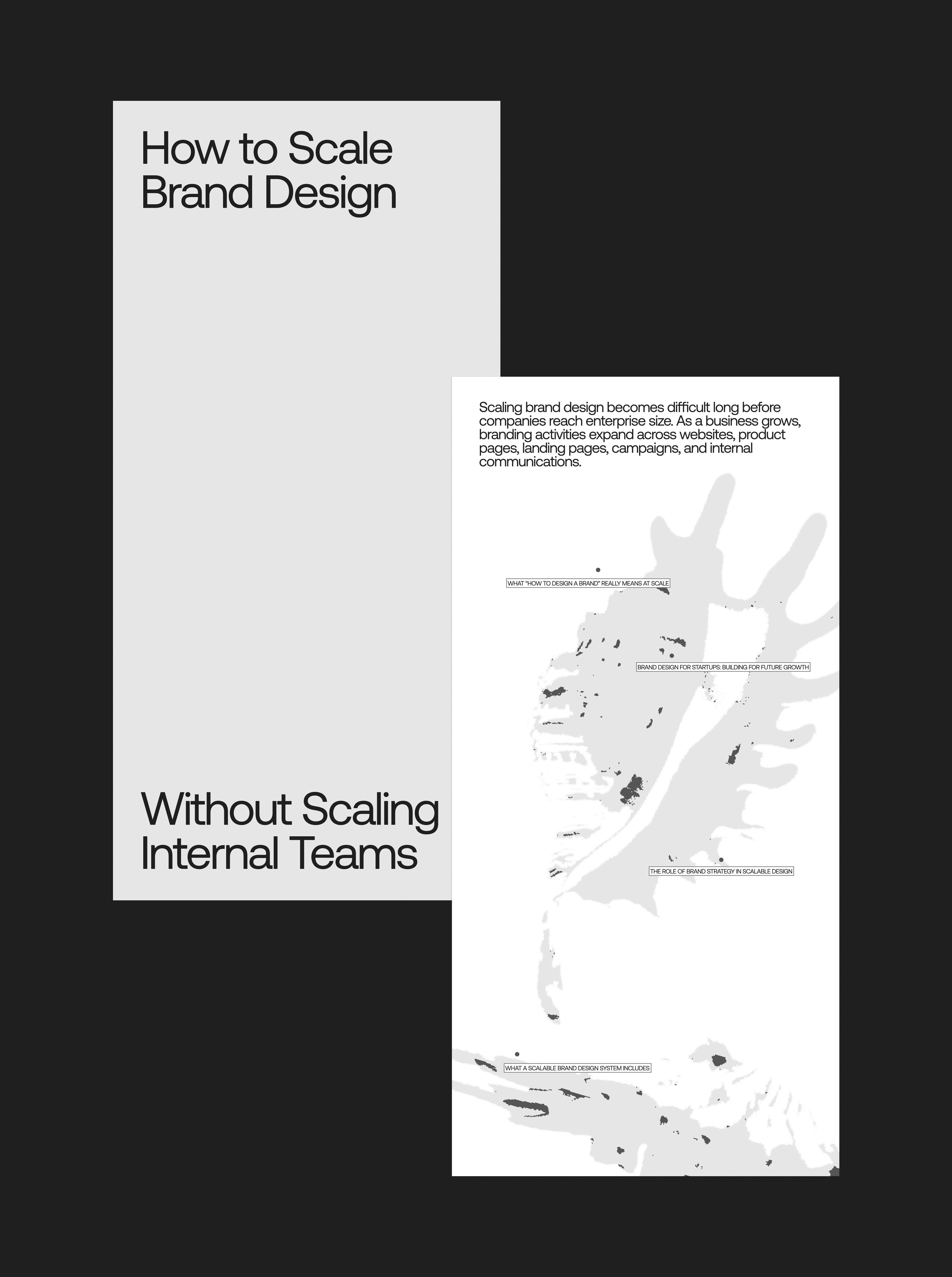
How to Scale Brand Design Without Scaling Internal Teams
Scaling brand design becomes difficult long before companies reach enterprise size. As a business grows, branding activities expand across websites, product pages, landing pages, campaigns, and internal communications. Visual elements multiply, messaging spreads across channels, and more people contribute to brand execution. Without structural systems in place, brand consistency weakens, creating a fragmented brand identity and an uneven brand image in the customer’s mind.
For many growing companies, the challenge is not a lack of designers but a lack of scalable brand design infrastructure. Learning how to design a brand that scales means treating brand design as a process, not just a creative output. When brand strategy, visual identity, and design workflow are built to scale from the beginning, companies can maintain a strong brand, consistent visuals, and clear messaging without continuously expanding internal teams.
Why Scaling Brand Design Becomes a Bottleneck for Growing Teams
The hidden limits of in-house design as companies grow
In-house design teams reach natural limits as demand increases. Each new request adds coordination overhead, context switching, and review cycles. Designers move between campaigns, product updates, and marketing assets, which reduces focus and slows delivery. As the company exists in more channels and markets, dependencies grow and small changes require broader alignment.
This creates a bottleneck where adding more designers does not proportionally increase output. Without standardized systems, each designer solves the same problems repeatedly, rebuilding visual assets and layouts instead of reusing established patterns. The result is slower execution and rising operational cost.
Why brand inconsistency increases operational complexity
Brand inconsistency increases complexity across the organization. When visual identity, brand voice, and messaging vary by team or channel, work needs to be reviewed, corrected, or redone. Marketing teams spend time aligning instead of executing, and product teams struggle to apply branding consistently across interfaces.
Inconsistent branding also affects customers. A strong brand image relies on consistent messaging, color palette, logo usage, and brand personality. When these elements shift, the brand becomes harder to identify, weakening brand recognition, customer loyalty, and trust.
How to Design a Brand That Scales From Day One
What “how to design a brand” really means at scale
At scale, how to design a brand means designing systems, not just assets. A scalable brand identity is built around reusable rules that govern visual elements, messaging, and application across contexts. Instead of focusing on the final look of individual materials, teams define how the brand behaves in different situations.
This approach shifts brand design from one-off decisions to repeatable processes. The brand exists as a system that can be applied consistently by different people, across different tools, without constant supervision.
Brand design for startups: building for future growth
Brand design for startups often prioritizes speed, but early decisions shape future scalability. Choosing a flexible but structured visual identity, defining core values, and clarifying brand voice early prevents rework later. Startups that invest in modular visual assets and clear messaging frameworks are better positioned to grow without losing consistency.
Building a brand that scales does not mean overdesigning. It means identifying which brand elements are core and must remain stable, and which can adapt as the business evolves.
The role of brand strategy in scalable design
Brand strategy provides the constraints that make scalable design possible. It defines the brand story, target audience, mission statement, and brand values that guide design decisions. Without strategy, design becomes reactive and inconsistent.
A clear brand strategy ensures that visual brand identity, messaging, and branding activities reinforce a single direction. This allows designers and non designers alike to make aligned decisions without constant approval, supporting consistent branding across the organization.
Design Systems vs Brand Guidelines: What Actually Enables Scale
What a scalable brand design system includes
A scalable brand design system includes more than a style guide. It combines visual identity rules, design tokens such as color scheme and typography, reusable components, and clear governance. These systems provide a single source of truth for visual assets and branding elements.
Design systems integrate directly into workflows, enabling teams to build product pages, marketing materials, and landing pages using shared components. This reduces duplication and ensures that brand consistency is maintained even as output increases.
Why static brand guidelines fail growing teams
Static brand guidelines describe how the brand should look, but they do not enforce consistency. As teams grow, guidelines are interpreted differently, outdated versions circulate, and manual enforcement becomes impractical.
Without systems embedded in tools and processes, guidelines rely on individual discipline. This leads to inconsistent visuals, fragmented brand identity, and slower execution as teams debate interpretation instead of applying clear rules.
Building a Scalable Design Workflow Without Hiring More Designers
How design workflow impacts speed and consistency
Design workflow directly affects both speed and consistency. Structured workflows reduce friction by standardizing how requests are handled, reviewed, and delivered. When templates, components, and predefined patterns are used, designers spend less time recreating assets and more time solving higher value problems.
Clear workflows also reduce errors. Consistent review stages and shared assets help ensure that branding remains consistent across campaigns, products, and marketing channels.
Standardising brand execution across teams and channels
Standardisation does not mean uniformity. It means defining how brand execution should happen across teams and channels. Shared libraries, component systems, and clear contribution rules allow teams to work in parallel while staying aligned.
This approach supports consistent messaging, consistent visuals, and a strong brand image across websites, campaigns, and digital products without slowing down execution.
When to Scale Brand Design With an External Agency
Signs internal teams are reaching capacity
Internal teams often reach capacity when review cycles lengthen, backlogs grow, and deadlines slip. Designers spend more time managing requests than designing, and component reuse decreases. These are operational signals that systems or capacity need reinforcement.
At this stage, adding designers alone may not solve the problem if underlying processes remain unchanged.
How external brand design partners enable scale
External brand design partners can help scale brand design by building systems, not just delivering assets. They provide professional help in establishing design systems, refining brand strategy, and standardizing workflows.
By acting as an extension of the internal team, external partners help companies scale brand design without increasing permanent headcount, reducing complexity while maintaining brand consistency.
How Scalable Brand Design Reduces Business Complexity
Brand systems as an operational efficiency tool
Brand systems reduce decision making overhead by providing defaults for common design choices. Teams no longer debate color palette, layout, or messaging structure for each asset. This accelerates production and reduces rework.
Over time, these systems support more impressions, stronger brand recognition, and a more efficient marketing process.
The link between brand consistency and business clarity
Brand consistency supports business clarity. When branding is consistent, teams communicate more clearly, customers understand the brand promise, and the brand builds trust. A strong brand identity makes the business easier to identify and remember.
Consistent branding connects brand strategy to execution, helping companies focus on growth rather than fixing avoidable complexity.
Brand Design Examples
Atlassian
Atlassian scaled its brand design by investing in a strong brand strategy and a modular design system rather than expanding its internal design team. Clear visual identity rules, shared components, and consistent messaging allow multiple teams to build marketing assets and product experiences while maintaining brand consistency and a strong brand image.
Shopify
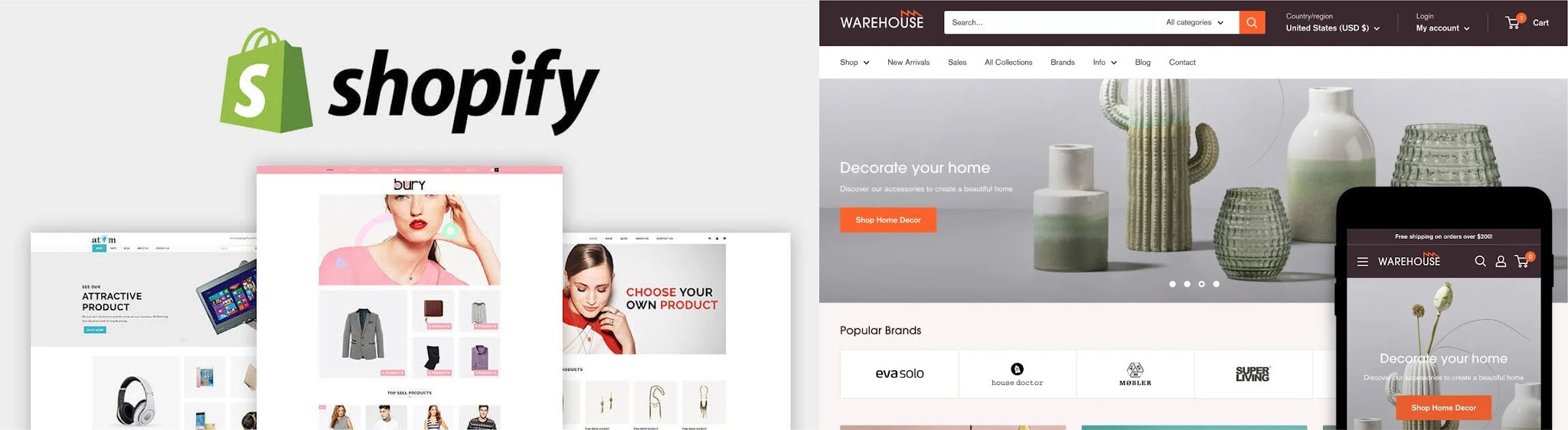
Shopify uses a system driven approach to brand design that supports rapid growth across products and channels. A well defined brand voice, scalable visual identity, and reusable visual assets enable teams to execute branding activities at scale without fragmenting the brand or increasing internal complexity.
FAQs
What does it mean to scale brand design without scaling internal teams?
It means building brand systems, workflows, and governance that allow consistent execution without continuously adding designers.
How to design a brand that scales for startups?
Startups should focus on clear brand strategy, modular visual identity, and reusable assets that support future growth.
Why does brand consistency matter when scaling?
Brand consistency builds trust, improves recognition, and reduces operational complexity as the business grows.
When should a company involve an external brand design partner?
When internal teams reach capacity or lack systems needed to support scale, an external partner can provide leverage without increasing headcount.

Masha is the founder of Bolder, a branding and communications agency for tech startups in AI, robotics, biotech, deep tech, and energy. She’s built three companies and leads a team of talented strategists and designers, helping technical founders turn hard to explain work into brands sharp enough to match the tech behind them.